The short answer
The best time to visit North East India is October to April. The South West monsoon reaches this corner of the country earlier and harder than anywhere else in India — the India Meteorological Department puts the advance over most of the North East at around 5 June — and it does not clear until early October. Between those two dates, roads slip, rivers rise and the great national parks physically close their gates.
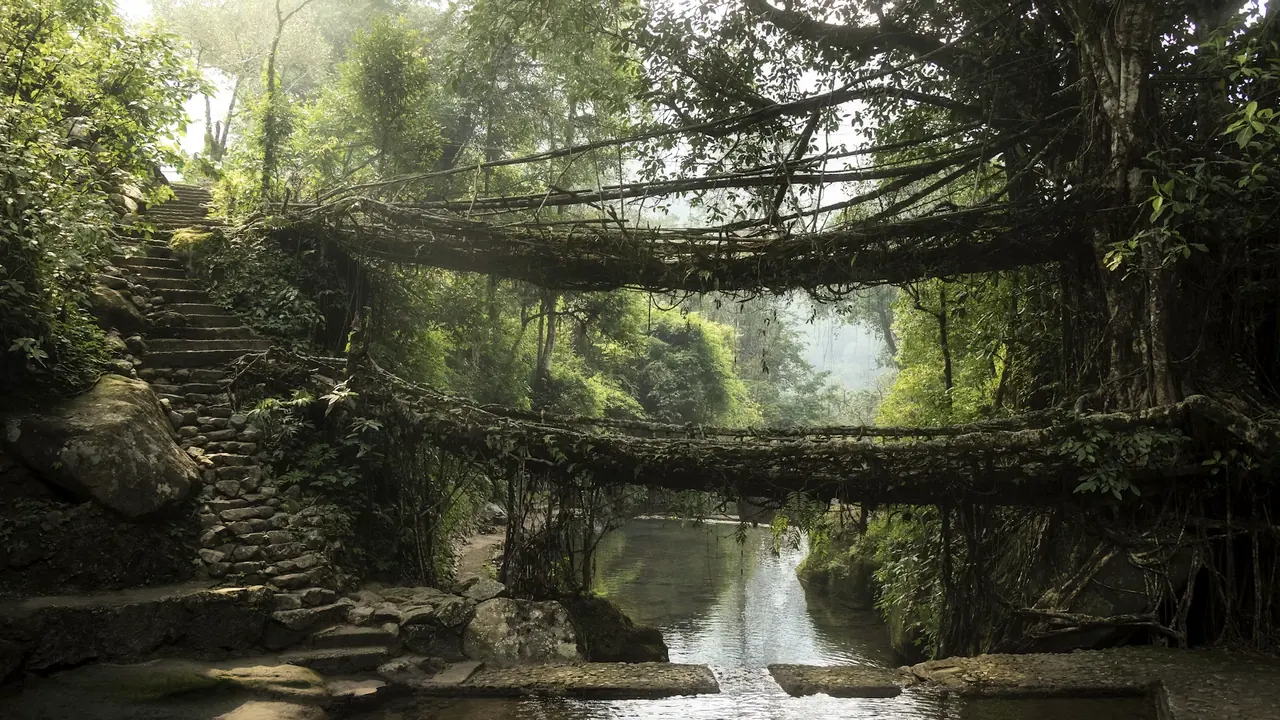
For a first journey, the natural pairing is Assam and Meghalaya: Kaziranga's grasslands and the Brahmaputra on one side, Shillong's hills, waterfalls and living root bridges on the other, both reached from a single airport. Add Arunachal Pradesh for Tawang's monasteries and high passes, Nagaland if you are travelling in early December for the Hornbill Festival, or Sikkim if you want the Himalaya proper.
Most travellers flying in from Delhi NCR or Mumbai need eight to ten days to make the journey worth the flights. It can be done in five or six if you stay within Assam and Meghalaya. It cannot sensibly be done in a long weekend.
The eight states, and where to start
"North East India" is a convenient phrase for eight states that have very little in common with one another beyond geography. Assam is river country, hot and flat and green. Meghalaya is limestone and cloud. Arunachal climbs to Buddhist Tibet. Nagaland and Mizoram are hill states with their own distinct cultures, and Sikkim is Himalayan in every sense. Choosing badly here is the most common planning mistake — people try to see all eight and end up seeing airports.
| State | What it is for | Permit for Indians? | Best window |
|---|---|---|---|
| Assam | Kaziranga, the Brahmaputra, Majuli, tea estates, Sivasagar | No | Nov–Apr |
| Meghalaya | Shillong, Sohra waterfalls, living root bridges, caves | No | Oct–Mar |
| Arunachal Pradesh | Tawang, Dirang, Ziro, high passes, Buddhist monasteries | Yes — ILP | Mar–May, Oct–Nov |
| Nagaland | Kohima, Naga culture, the Hornbill Festival | Yes — ILP | Oct–Apr, Dec for Hornbill |
| Sikkim | Gangtok, high lakes, monasteries, rhododendrons | No to enter; yes for border areas | Mar–May, Oct–Nov |
| Mizoram | Aizawl, hill country, now reachable by train | Yes — ILP | Oct–Mar |
| Tripura | Ujjayanta Palace, Neermahal, Unakoti rock carvings | No | Oct–Mar |
| Manipur | Loktak Lake, Imphal valley | Yes — ILP | See the note below |
Our honest recommendation for a first trip: Assam and Meghalaya together. They share the Guwahati gateway, the driving distances are civilised, neither needs a permit, and between them they hold Kaziranga's rhinos and Sohra's waterfalls — the two images most people have in their heads when they say they want to see the North East.
Manipur has been through a difficult period since 2023, with restrictions and curfews at various points and several foreign governments still advising against non-essential travel there as of mid-2026. The position changes, sometimes quickly and in both directions. We do not build Manipur itineraries on assumption — if it is somewhere you particularly want to go, tell us and we will check the current situation with local contacts and government sources before advising you either way.
When to go, region by region
The broad rule
October to April is the travelling season across almost the whole region. October is the reliable clearing month, when the monsoon withdraws and the waterfalls are still full. November through February is the driest and most comfortable stretch, and the right window for wildlife. March and April bring the rhododendrons and the mountain passes back into play.
June to mid-September is full monsoon. That does not make travel impossible, but it changes what you are buying.
| Region | Best window | Why |
|---|---|---|
| Assam | Nov–Apr | Kaziranga, Manas and Nameri are closed through the monsoon; the Brahmaputra floods each year. Assam's Forest Department gives November to April as the season for all its national parks. |
| Meghalaya | Oct–Mar | Meghalaya Tourism treats November to February as the driest season and the right one for trekking and caving; October and November give you full waterfalls with safe paths. |
| Arunachal | Mar–May, Oct–Nov | Rhododendrons around Tawang in April; clear autumn skies in October. Snow can disrupt the high approaches from late November into March. |
| Nagaland | Oct–Apr | Comfortable hill weather. Early December for the Hornbill Festival. The Dzukou Valley trek is at its safest in October and November. |
| Sikkim | Mar–May, Oct–mid Nov | The IMD's normals for Gangtok put monsoon onset around 8 June and withdrawal around 6 October, which brackets the two clean shoulder windows neatly. |
Should you ever travel in the monsoon?
For one specific reason, yes. Meghalaya in monsoon is a genuine experience rather than a compromise. Sohra (Cherrapunji) and Mawsynram are among the wettest inhabited places on earth — IMD long-period figures put Mawsynram at roughly 11,800 mm a year and Sohra at roughly 11,400 mm — and the waterfalls at peak flow are extraordinary. Meghalaya Tourism's own monsoon guidance is to enjoy the rivers and falls from a distance, since swimming and water activities are not permitted, and to come with waterproofs and anti-slip footwear.
What we would not sell you in monsoon is the Nongriat double-decker root bridge trek — Meghalaya Tourism itself recommends October to March for it, and the descent is around three and a half thousand stone steps that turn treacherous in heavy rain. Nor would we put an Arunachal or Sikkim mountain road in a June-to-September itinerary without real slack built in.
Permits: what Indian travellers actually need
This is the part that catches people out, and it is the single most common question we get from first-time North East travellers. Four states require an Inner Line Permit from Indian citizens who are not residents of that state. It is not a formality you can sort out at the airport in every case, and travelling without one is not an option.
| State | Required? | How it works |
|---|---|---|
| Arunachal Pradesh | Yes, statewide | Applied online through the state's eILP portal. The portal lists the tourist permit as valid for stays of up to 14 days, at ₹300 for up to three days and ₹500 beyond that. |
| Nagaland | Yes, statewide | Fully online since the end of 2024 — offline applications are no longer accepted. The official fee page lists ₹200 for a domestic tourist permit valid 30 days, plus gateway charges. |
| Mizoram | Yes | Online, or on arrival at Lengpui airport. Fees and validity have been under revision — we confirm the current position before you travel rather than quoting an old figure. |
| Manipur | Yes, since Dec 2019 | Online, or at counters including Imphal airport. The state portal lists a temporary tourist permit at ₹100, valid 30 days. |
| Assam, Meghalaya, Tripura | No | No permit for Indian citizens. Meghalaya does require accommodation providers to register every guest under state law, which your hotel handles. |
| Sikkim | Not to enter | Indians need nothing to enter Sikkim, Gangtok, Pelling or Namchi — but the border and protected areas are a separate matter. See below. |
Sikkim's protected areas are different
You do not need a permit to enter Sikkim as an Indian citizen. You do need one for Tsomgo (Changu) Lake, Baba Mandir, Nathula Pass, the Dzuluk–Kupup belt, and North Sikkim — Lachen, Lachung, Yumthang and Gurudongmar. The state's Tourism and Civil Aviation Department is explicit that these permits are issued online through the police check post via government-registered travel agencies and tour operators, not directly to the traveller. Nathula itself is open to Indian nationals only.
For Sikkim protected-area permits, the state government's published requirement is a valid Indian passport, Voter ID, Indian driving licence or a central or state government-issued identity document as proof of nationality — and it specifically states that an Aadhaar card is not accepted as proof of citizenship or nationality. Carry a Voter ID or passport. Two passport-size photographs are also required, and birth certificates for minors. We have seen families turned back at the check post for this alone.
North Sikkim in particular deserves care. Access has been disrupted repeatedly since the 2023 glacial flood; Lachung and Yumthang reopened in September 2025 and permits for Lachen and Gurudongmar Lake resumed on 9 March 2026, over a new bailey suspension bridge that takes light vehicles one at a time. A landslide closed the Lachen road again in April 2026. None of that means you should not go — it means the itinerary needs slack and a plan B, which is exactly what our North Sikkim, Lachung and Lachen itinerary is built around.
Planning a private North East journey?
Tell us your dates, how many are travelling and which states you have in mind. We will handle the permits, the sequencing and the hotels, and send you a private, tailor-made itinerary — with a named travel designer who stays with you from the first enquiry to your journey home.
Flying in from Delhi NCR, Mumbai & Bengaluru
Almost every North East journey begins at one of three airports, and choosing the right one saves a full day.
Guwahati (GAU) — the gateway for most of the region
Lokpriya Gopinath Bordoloi International is the largest airport in the North East and the only one with reliable non-stop service from both Delhi and Mumbai, as well as Bengaluru, Chennai, Hyderabad and Kolkata. A new integrated terminal opened for commercial operations in February 2026, so check which terminal your transfer meets you at. From Guwahati, Shillong is roughly a hundred kilometres and about three hours by road, and Kaziranga is about 250 kilometres and five hours by the Assam Forest Department's own figure.
For travellers from Delhi NCR or Mumbai, this is almost always the right answer. A morning flight puts you in Shillong or Kaziranga the same afternoon.
Dibrugarh (DIB) — for upper Assam, Majuli and Ziro
Dr Bhupen Hazarika Airport at Mohanbari has non-stop flights from Delhi and from Kolkata, but not from Mumbai — Mumbai travellers connect through Delhi, Kolkata or Guwahati. It is the sensible gateway if your journey is weighted towards upper Assam, the tea estates, Majuli island or Arunachal's Ziro valley.
Bagdogra (IXB) — for Sikkim and Darjeeling
Sikkim's own airport at Pakyong has had no scheduled commercial flights since June 2024, and the Ministry of Civil Aviation confirmed in July 2025 that no airline had applied to restart them. Do not build a Sikkim itinerary around it. Bagdogra, near Siliguri, is the working gateway for Gangtok, Pelling and Darjeeling, with good non-stop service from Delhi. A new terminal is under construction there, so allow extra time for congestion.
If Sikkim is your destination rather than a leg of a wider trip, start with our Sikkim tour packages, or the complete Sikkim itinerary if you want the full arc across the state.
| Where you want to go | Fly to | From Delhi | From Mumbai |
|---|---|---|---|
| Kaziranga, Shillong, Sohra | Guwahati (GAU) | Non-stop | Non-stop |
| Tawang, Dirang, Bomdila | Guwahati (GAU), then road | Non-stop | Non-stop |
| Majuli, tea estates, Ziro | Dibrugarh (DIB) | Non-stop | Connect via DEL/CCU/GAU |
| Gangtok, Pelling, Darjeeling | Bagdogra (IXB) | Non-stop | Check current schedules |
| Kohima, Hornbill Festival | Dimapur (DMU) or Guwahati | Via GAU/CCU | Via GAU/CCU |
| Aizawl, Mizoram | Lengpui (AJL) | Non-stop | Connect |
| Agartala, Tripura | Agartala (IXA) | Non-stop | Non-stop |
Getting there by rail
Guwahati is the principal railhead for the whole region and the nearest one to Shillong, which has no railway of its own. New Jalpaiguri remains the railhead for Sikkim and Darjeeling — the Sivok–Rangpo line that will finally bring trains into Sikkim was reported at around ninety per cent complete in February 2026, with a target of December 2027, so it is not an option yet. Mizoram, by contrast, got its first railway in September 2025 when the Bairabi–Sairang line opened, and Aizawl now has a direct Rajdhani to Delhi.
How many days do you need?
This is the question that decides whether a North East trip is a pleasure or a scramble, and the honest answer depends on where you are flying from. From Delhi NCR or Mumbai you are giving up most of two days to travel, so short trips lose a disproportionate amount to transit.
- 5–6 days — Assam and Meghalaya only. Guwahati, Shillong, Sohra and the Mawlynnong side, or Guwahati and Kaziranga. Comfortable, and genuinely worthwhile.
- 8–10 days — the length most of our guests choose. Kaziranga and Meghalaya together, or Assam plus a Tawang loop, or Sikkim done properly rather than at a run.
- 12–14 days — Assam, Meghalaya and Arunachal in one arc, or a journey timed around the Hornbill Festival with Kaziranga either side of it.
- A long weekend — not the North East. Distances and road conditions do not allow it. If you have three or four days, Sikkim from Bagdogra is the only version that works, and even then it is tight.
Tawang deserves a specific warning. The Sela Tunnel, opened in March 2024 at around 13,000 feet, gave the Tezpur–Tawang road all-weather connectivity across Sela Pass and removed the old winter closure risk — but Tawang is still roughly 480 kilometres and fourteen to sixteen hours from Guwahati by the district administration's own figure. Nobody should attempt that in a day. An overnight at Dirang or Bomdila is standard practice, and we build it in.
For Sikkim, the sequencing questions are similar. Our Gangtok and Darjeeling itinerary suits first-timers, Gangtok with Tsomgo and Nathula adds the high-altitude day, and Pelling and West Sikkim is the quieter alternative to the Gangtok circuit.
Kaziranga and the wildlife season
Kaziranga is the reason a great many people come to Assam, and it rewards the trip. Inscribed on the UNESCO World Heritage List in 1985 and declared a tiger reserve in 2007, it held 2,613 one-horned rhinos at the 2022 census — the largest population anywhere.
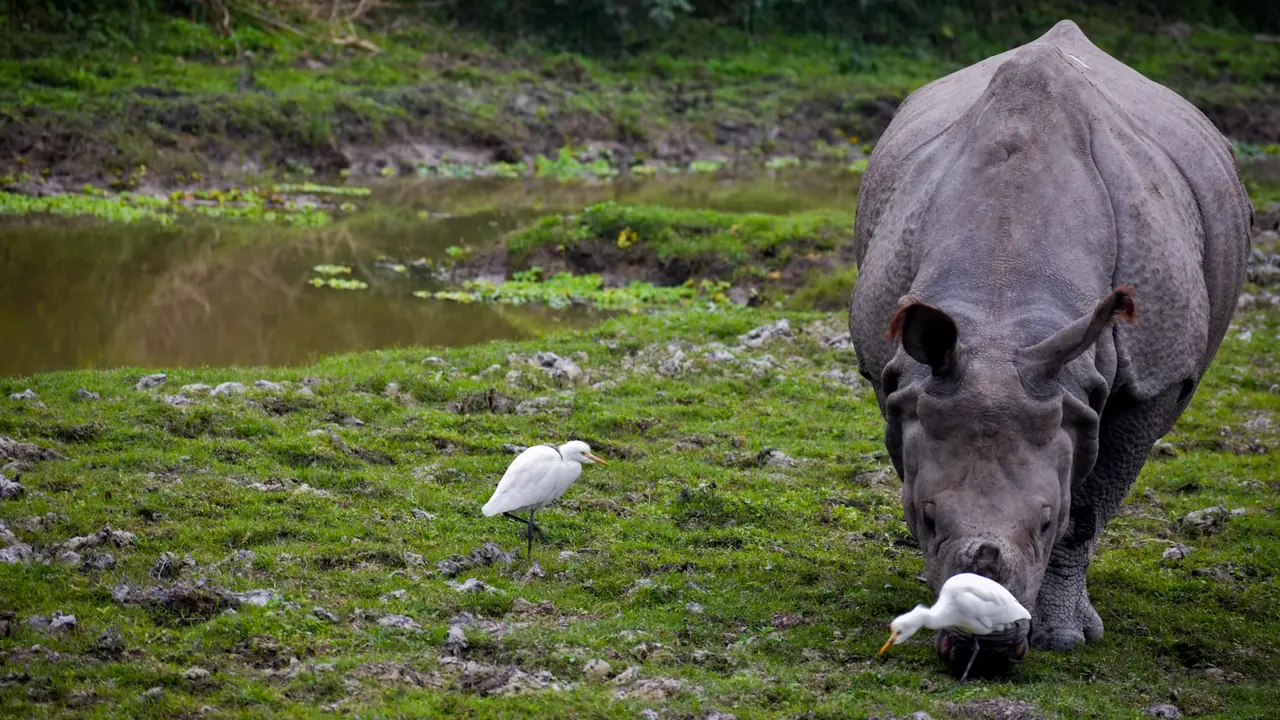
The practical points matter more than the superlatives. The park closes for the monsoon and reopens for the new season in autumn; the exact date is set each year by the Assam authorities, and the ranges open in phases rather than all at once. In the 2025–26 season the western range opened in late September while the central Kohora range did not open until early November. Elephant safaris have started on 1 November in each of the last two seasons, about a month after the jeep safaris.
At the time of writing, the opening date for the 2026–27 Kaziranga season had not been announced. We would not confirm a Kaziranga itinerary against an assumed date, and we would not sell an October arrival an elephant safari that historically does not begin until November. When you enquire, we check the current position with the park authorities and tell you what is actually available for your dates.
Within the open season, December to February gives the best combination of comfortable weather and wildlife, with cool misty mornings and peak birdlife. March and April improve visibility as the tall elephant grass is cut back, which raises your odds on tigers and larger mammals, at the cost of hot afternoons. Rhinos are seen reliably right across the season.
If a river journey appeals more than a jeep, Assam Tourism gives October to April as the Brahmaputra cruise season, with the flagship route running between Dibrugarh and Guwahati and shorter sectors towards Kaziranga.
Festivals worth timing a trip around
The North East's festival calendar is one of the strongest reasons to travel here, and unlike much of India several of the headline events fall on fixed dates.
- Hornbill Festival, Nagaland — held from 1 to 10 December every year at the Naga Heritage Village at Kisama, about twelve kilometres from Kohima. It opens on Nagaland's statehood day, which is why the window does not move. Accommodation in and around Kohima is the binding constraint and needs securing months ahead.
- Ziro Festival of Music, Arunachal Pradesh — the organisers list 24 to 27 September 2026 in the Ziro valley. Note that it sits at the tail of the monsoon, and that Ziro needs an Inner Line Permit.
- Bihu (Bohag Bihu), Assam — fixed to 14 April, with Assam observing a public holiday across 14 to 16 April. The next one falls on 14 April 2027.
- Wangala, Meghalaya — the organised Hundred Drums Wangala Festival is held in the Garo Hills near Tura, typically in the first week of November. Dates are announced each year.
- Losar — the Tibetan and Monpa new year, celebrated at Tawang and across Buddhist Arunachal and Sikkim. It follows the lunar calendar and falls in February or March, so the date moves annually.
Festival dates other than the fixed ones above are announced by state tourism departments each year, sometimes only a few weeks ahead, and are occasionally revised. Confirm with the relevant state tourism department before committing to flights and hotels — or simply tell us which festival you want to see, and we will build the journey around the confirmed date once it is published.
What we tell clients honestly
The North East is the most rewarding region in India to travel and the least forgiving to plan badly. Four things are worth saying plainly.
Roads fail, and they fail at short notice
Landslides are a normal feature of the monsoon here, not an exception. In June 2026 alone, a landslide closed the Shillong–Dawki road beyond Laitlyngkot — the main corridor to Mawlynnong and Dawki — and separate slides cut national highway stretches in Arunachal serving the Tawang districts. Sikkim's NH-10 and the North Sikkim spur have a long record of the same. We build 24 to 48 hours of slack into any monsoon-season mountain itinerary, and we do not schedule a same-day onward flight connection out of a mountain segment between June and September.
Assam floods every year
The Brahmaputra floods in the monsoon, sometimes severely, affecting districts around Kaziranga, Majuli and Jorhat. This is one of the reasons the parks close. It is also why we plan Assam for the dry season and check the state disaster management position before any monsoon-shoulder departure.
Permits need lead time
Inner Line Permits for tourists are usually straightforward and often quick — Nagaland's own guidance suggests tourist permits are typically approved within a few hours during business hours — but they are documents, and documents occasionally go wrong. Sikkim's protected-area permits must go through a registered operator and cannot be arranged on the morning of travel. We start permits well before departure, not on arrival.
The hotels are not Rajasthan's
Outside Guwahati, Shillong and Gangtok, the accommodation is good rather than grand, and the best properties in places like Kaziranga and Tawang are small and fill early. Setting expectations honestly here is part of our job. What the North East offers instead is landscape, culture and quiet that no palace hotel in India can match. If you are after the palace-stay experience, that is a different journey, and we have written about the best palace hotels in India separately.
Frequently asked questions
What is the best time to visit North East India?
How do I get to North East India from Delhi?
How do I get to North East India from Mumbai?
Do Indian citizens need a permit for North East India?
Is an Aadhaar card enough for Sikkim permits?
How many days do I need for a North East India trip?
When does Kaziranga National Park open?
Can I fly directly into Sikkim?
When is the Hornbill Festival held?
Is North East India suitable for families and elderly parents?
Planning your journey
The North East is not a destination you improvise. Permits, park seasons, festival dates and the state of a single mountain road can each decide whether an itinerary works, and none of them are visible from a booking site. That is the part we take off your hands.
At Itinerary Diary we design private, tailor-made North East journeys — your own car and chauffeur, handpicked stays, permits arranged before you fly, and a named travel designer from your first enquiry to your journey home. Nothing shared, nothing off a shelf, and we will tell you honestly when a plan does not work rather than sell it to you anyway.
Tell us your dates and we will send a hand-written itinerary within one working day. If Sikkim is where you want to start, our Sikkim highlights itinerary is a good place to begin, and you may also like our guide to the best time to visit Rajasthan if you are weighing up where to travel this season.