Why Varanasi matters
Varanasi — Kashi, Banaras — is among the oldest continuously inhabited cities in the world, and for Hindus it is among the most sacred places on earth. It is the city of Shiva, home to one of the twelve Jyotirlingas, and the place where many hope to be cremated so that the cycle of rebirth may end. That belief is not a tourist attraction here. It is the daily, visible business of the city.
This matters practically, because Varanasi is not a sightseeing destination in the ordinary sense. Nothing is curated for visitors. The ghats are working religious space, the lanes are residential, and the cremation grounds are exactly what they appear to be. Travellers who arrive expecting a monument circuit often find it overwhelming; travellers who arrive expecting to observe a living city usually find it one of the most moving places they have ever been.
The most useful preparation for Varanasi is not a checklist. It is the decision to move slowly and watch more than you photograph.
Best time to visit Varanasi
October to March is comfortably the best window. Mornings on the river are cool and clear, the light is beautiful, and long walks along the ghats are pleasant rather than punishing. November and February are particularly good.
- October–March: the ideal season. December and January mornings can be genuinely cold and misty on the water — carry a layer for the sunrise boat.
- April–June: very hot. Sightseeing is limited to early morning and evening.
- July–September: monsoon. The Ganges rises, sometimes substantially, and boating can be restricted or suspended on safety grounds. Some lower ghats may be submerged.
Dev Deepawali, on the full moon of Kartik (usually November), is the city's most spectacular night, when the ghats are lit with thousands of lamps. It is extraordinary — and the single busiest date in the Varanasi calendar. Hotels and boats need to be secured months ahead. For a fuller seasonal breakdown, see our guide to the best time to visit Varanasi.
How many days do you need?
Two nights is the practical minimum — enough for one sunrise boat ride, one evening aarti, the temple, and a walk through the old city. Three nights is the comfortable answer, adding Sarnath and a second, slower morning on the river. Four nights suits travellers who want to pair Varanasi with Prayagraj or simply move at a gentler pace.
Varanasi is a city where a rushed schedule defeats the purpose. Two unhurried days will stay with you far longer than three frantic ones.
Where to stay
- Near the ghats (Assi, Shivala, Dashashwamedh area). The atmospheric choice — you can walk to the river before dawn. The trade-off is that vehicles cannot reach many properties directly; expect a short walk with luggage through lanes.
- The Cantonment area. Quieter, greener, home to most of the larger and more comfortable hotels, with easy vehicle access and better parking. Around a 20–30 minute drive from the ghats depending on traffic.
- Heritage riverside properties. A handful of restored havelis and heritage hotels sit directly on the river. These offer the best of both worlds and are usually the ones we recommend for guests who want comfort without losing the ghats.
For families with elderly parents, the Cantonment is often the wiser base, with the ghats reached by car and a short assisted walk. For couples and first-time visitors chasing atmosphere, riverside is worth the minor inconvenience.
The ghats, and which ones matter
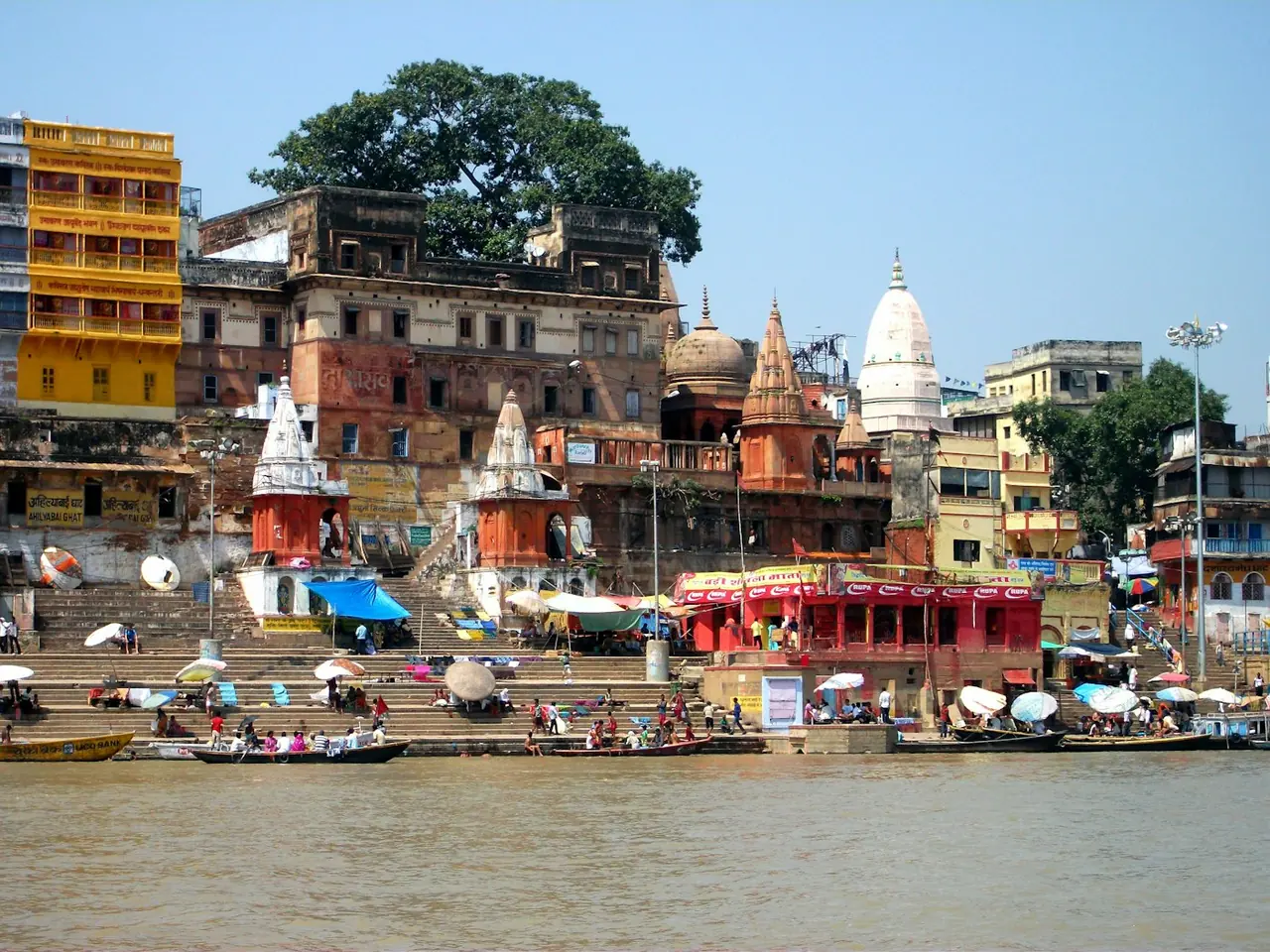
More than eighty ghats line the western bank of the Ganges in a long crescent. You do not need to learn them all. These are the ones that shape most visits:
- Assi Ghat — the southern end, and the calmest introduction. Morning prayers and yoga take place here at dawn; it is also the usual starting point for a sunrise boat ride.
- Dashashwamedh Ghat — the principal and most crowded ghat, and the setting for the evening Ganga Aarti.
- Manikarnika Ghat — the main cremation ghat, in continuous use. Photography is not appropriate here.
- Harishchandra Ghat — the second cremation ghat, smaller and older.
- Man Mandir Ghat — home to an eighteenth-century observatory built by Sawai Jai Singh II, of Jaipur fame.
- Panchganga Ghat — where five rivers are believed to meet, crowned by a striking mosque.
At Manikarnika and Harishchandra, cremations are taking place in front of you. Do not photograph or film, do not linger for a better view, and decline offers from anyone soliciting "donations for wood" — this is a well-known approach directed at visitors. Keep a respectful distance and let the families be.
The sunrise boat ride
If you do one thing in Varanasi, do this. A private boat pushing off before first light, drifting north along the ghats as the city wakes, is the experience almost every visitor remembers most clearly. You will pass priests at their first prayers, bathers, wrestlers at their akhara, laundry drying on the steps, and the old palaces of long-gone princely families stacked above the river.
Start around 45 minutes before sunrise. Rowing boats are quieter and far more pleasant than motorboats. In winter, bring a warm layer — the river is colder than the city. Many visitors also take a second, shorter boat in the evening to watch the aarti from the water, which is a completely different and equally worthwhile perspective.
Ganga Aarti at Dashashwamedh
Every evening at Dashashwamedh Ghat, young priests perform the Ganga Aarti — an elaborate, synchronised ceremony of fire lamps, conch shells, incense and bells offered to the river, watched by thousands from the steps and from boats moored on the water. It takes place daily, generally beginning around dusk, with timings shifting through the year as sunset moves.
There are three ways to watch it: from the steps (free, crowded, and immersive — arrive early for a decent position), from a boat on the river (the best overall view, and the option we usually arrange for guests), or from a rooftop or balcony of a building overlooking the ghat. A quieter morning counterpart, Subah-e-Banaras, takes place at Assi Ghat at dawn and is worth seeing if your schedule allows.
Kashi Vishwanath Temple
The spiritual centre of the city is the Shri Kashi Vishwanath Temple, one of the twelve Jyotirlingas of Shiva. Since the Vishwanath Dham corridor project, the temple complex connects directly through to the riverfront near Lalita Ghat, which has made access considerably easier than the old approach through narrow lanes — a meaningful difference for older pilgrims.
The temple operates a range of aartis and paid poojas that can be booked in advance through its official portal. According to the temple's own booking information, the early morning Mangla Aarti begins between 3:00 and 4:00 AM, with devotees admitted between 2:30 and 3:00 AM; the ticket is priced at ₹500, entry for children below the age of 12 is free, each devotee must carry an identity card along with the ticket, a hard copy of the ticket is required at the time of the pooja, and darshan dates cannot be rescheduled. Other bookable aartis listed include the Mid Day Bhog Aarti, Sapt Rishi Aarti and Shringaar/Bhog Aarti.
Temple timings, ticket prices, booking rules and entry procedures change, and are tightened further on festival days. Always confirm current details on the official Shri Kashi Vishwanath Temple portal before your visit rather than relying on third-party listings. Mobile phones, cameras and bags are generally not permitted inside; deposit facilities are available near the entrances. Dress modestly, and expect airport-style security screening.
Other temples worth your time include the Kaal Bhairav temple, the Sankat Mochan Hanuman temple, the Durga temple, and the New Vishwanath Temple inside the leafy campus of Banaras Hindu University — the last being a calm, spacious contrast to the intensity of the old city.
Sarnath
About 10 km from the ghats lies Sarnath, where the Buddha delivered his first sermon after attaining enlightenment. It is one of the four principal Buddhist pilgrimage sites, and it feels like another world entirely — lawns, birdsong and stillness after the density of the old city.
The highlights are the great Dhamek Stupa, the Chaukhandi Stupa, the monastery ruins, the Mulagandha Kuti Vihara temple, and the Sarnath Museum, which holds the Ashokan lion capital — the sculpture adopted as the State Emblem of India. Allow a half day. Museum opening days and hours should be checked locally before you go.
Food & shopping
Banaras takes its food seriously, and almost all of it is vegetarian. Mornings belong to kachori-sabzi with jalebi. Afternoons call for a thick lassi in a clay cup. Winter brings malaiyo, a saffron-scented milk froth so light it disappears on the tongue, sold only in the cold months. Tamatar chaat and baati chokha are local specialities, and a Banarasi paan is the traditional full stop to a meal.
The city's other great craft is silk. Banarasi brocade is woven on handlooms in the weaving quarters, and a genuine piece is a serious purchase. Buy through a reputable establishment or with someone who can distinguish handloom from powerloom — commission-driven "workshop tours" are common, and the difference in value is substantial.
Families and senior travellers
Varanasi works well for both, with planning. For elderly parents and pilgrims, the corridor has made Kashi Vishwanath far more accessible than it once was, but the old city still means uneven stone, steps down to the boats and long queues on busy days. Assistance at the boat, a car waiting where the lanes end, and a visit scheduled outside peak darshan hours make an enormous difference.
For families with children, the boat ride is usually the highlight; the cremation ghats are best skipped or passed at distance without commentary. Sarnath's open lawns are a welcome release after the density of the ghats.
Getting around & practical notes
- Arriving: Lal Bahadur Shastri International Airport (VNS) sits roughly 25 km from the city. Varanasi Junction is the main railway station, with Banaras and Manduadih also serving the city.
- In the city: auto-rickshaws, e-rickshaws and cycle rickshaws. The old city lanes near the ghats are effectively pedestrian-only — no car will reach the river's edge.
- Footwear: ghat steps can be wet, uneven and slippery. Sensible shoes, not sandals, especially at dawn.
- Guides: use a properly arranged guide. Unofficial approaches at the ghats and outside the temple are frequent and often lead to shopping commissions.
- Photography: ask before photographing sadhus or worshippers, and never at the cremation ghats.
- Festival days: during Dev Deepawali, Mahashivratri and major bathing dates, expect road closures, restricted vehicle access and very large crowds. Plan arrival and departure buffers.
Planning a private spiritual journey to Kashi?
Tell us your dates, who is travelling and whether darshan, aarti or a slower pace matters most. We will design a private, tailor-made itinerary — with a car and driver, a stay chosen for your comfort, and assistance where the lanes and queues begin.
Suggested itineraries
2 days in Varanasi
Day 1: arrive, rest, then an early evening walk along Assi Ghat before watching the Ganga Aarti at Dashashwamedh from a boat.
Day 2: sunrise boat ride along the ghats; breakfast; darshan at Kashi Vishwanath at a pre-planned hour; a guided walk through the old city and its lanes; evening free.
3 days in Varanasi
Days 1–2: as above, at a gentler pace.
Day 3: a half day at Sarnath — Dhamek Stupa, the ruins and the museum — returning for an afternoon at leisure, a silk-weaving visit, or Subah-e-Banaras the following dawn.
4 days in Varanasi
Add either a slower second river morning with time at Man Mandir and Panchganga, and the temples of Sankat Mochan and BHU; or a day trip to Prayagraj for the Triveni Sangam, the confluence of the Ganga, Yamuna and the unseen Saraswati. Our Varanasi & Prayagraj itinerary is built for this pairing.
Frequently asked questions
What is the best time to visit Varanasi?
How many days are enough for Varanasi?
What are the Kashi Vishwanath Temple timings?
Do I need to book the Ganga Aarti in advance?
Is Varanasi safe for families and solo travellers?
Can elderly parents manage Varanasi?
Is photography allowed at the ghats?
What should I wear in Varanasi?
Travelling to Varanasi with us
Varanasi asks for a little surrender — but surrender need not mean discomfort. A stay chosen for calm rather than novelty, a private boat instead of a shared one, a guide who understands temple protocol, and a car waiting where the lanes end: these are the details that turn an intense city into a profound one.
Itinerary Diary designs private Hindu pilgrimage journeys and tailor-made spiritual travel across India, including the wider pilgrimage circuit and the Char Dham Yatra. Every journey is private, planned around your family, and confirmed in writing — the hotels you book are the hotels you get.