The 2026 bloom is in its last stretch. On 12 September, Kerala reporting said the flowering was expected to last another 25 to 30 days, which points to roughly the second week of October. After mid-October, expect most slopes to have finished. We have not seen a confirmed status report for early October, so check with your hotel or driver the day before you go up to a viewpoint.
- Chokramudi kurinji garden: open 7 am to 4 pm. ₹200 for adults and ₹400 for foreign nationals, with lower rates for children; camera permits are extra. Drones are banned.
- Korandakkad (Mattupetty side): ₹250 for adults, ₹100 for children under 12, free under 5. Still a 2 km walk on plantation land.
- Meesapulimala: announced in August as limited to 750 visitors a day, at ₹1,200 per person including the trip and food, run by the Kerala Forest Development Corporation.
- Do not pick the flowers. Neelakurinji is a protected plant; damaging it can mean a fine of up to ₹25,000 and up to three years in prison.
- Getting there: KSRTC has run special buses from Munnar town to Devikulam for the bloom.
Travelling after mid-October? Munnar is still worth the trip for the tea estates, Eravikulam National Park, Top Station and the cool high-range air — just do not book it for the flowers alone.
Going to Munnar in October?
Tell us your dates, the number of travellers and your preferred hotel category. If the bloom is still on, we plan those mornings first and build the rest of Kerala around them — hotels, a private car and driver, and one person looking after your booking.
Or see our Kerala tour packages and the Munnar & Alleppey itinerary.
Neelakurinji — Strobilanthes kunthiana — flowers once, sets seed, and dies. The seed lies in the soil for about twelve years before the next generation flowers together, all at once, across whole hillsides. It is one of the very few natural events in India you can genuinely build a holiday around, because it has a date rather than a season.
It is happening in Munnar now. But almost every page you will read about it is confused in the same two ways, and both of them can cost you a wasted day.
Quick Answer
| Question | Answer |
|---|---|
| Is Neelakurinji blooming in Munnar in 2026? | Yes, but it is in its last weeks. Flowering began on Chokramudi in August and spread to the Mattupetty hills. On 12 September, reports expected another 25–30 days. |
| Is this the famous twelve-year bloom? | Yes, but of a different population. Eravikulam’s kurinji flowered in 2018 and is next due in 2030. This one last flowered in 2014. |
| Where can I see it? | Chokramudi (near Gap Road), the Mattupetty–Korandakkad hills, with flowering reported spreading toward Meesapulimala. |
| Is it inside Eravikulam National Park? | No. An operator promising you kurinji at Eravikulam this year has not checked. |
| How long will it last? | To roughly the second week of October, going by the 12 September forecast. After mid-October most slopes will have finished. Check the day before. |
| Do I need a ticket? | Yes at the main sites. Chokramudi: ₹200 adults, ₹400 foreign nationals, 7 am–4 pm. Korandakkad: ₹250 adults, plus a 2 km walk on plantation land. |
| Best base | Munnar town or the Mattupetty–Chithirapuram side, depending on which slope you want to reach at dawn. |
| Ideal trip length | 3 nights for Munnar alone; 6–8 nights to pair it with the backwaters or Thekkady. |
| September 2026 weather | Unusual. Kerala ran 3–4 °C above normal in early September on a weak monsoon, with rain forecast to return around 10–12 September. |
| Should I book now? | For the first half of October, yes — and keep the viewpoint days flexible. After mid-October, plan Munnar for the tea country and the cool weather, not the bloom. |
The 2030 Confusion, Cleared Up
Search for Neelakurinji and you will find a great many pages — including Kerala Tourism’s own site — describing a bloom cycle that does not match what is happening this month. Those pages are not wrong. They are describing a different mountain.
Kurinji does not bloom across the Western Ghats on one synchronised clock. Each population runs its own twelve-year cycle, set by when its parents last flowered and died.
| Population | Flowered | Next due |
|---|---|---|
| Eravikulam National Park / Rajamala — the famous one | 2006, 2018 | 2030 |
| Mattupetty–Kannimala and the Chokramudi slopes | 1990, 2002, 2014 | 2026 — now |
Two dates, both correct, two different hillsides. It matters practically: Eravikulam is the park with the shuttle bus and the ticket counter that everyone knows how to book. The 2026 bloom is not there. It is on ridges that need a car, a walk, and in one case a plantation company’s permission.
Ask the operator to name the hill. “Neelakurinji in Munnar” is not an answer. “Chokramudi” or “the Korandakkad side at Mattupetty” is. If the answer is “Eravikulam” or “Rajamala”, they are describing 2030.
Where It Has Been Flowering
This is a living thing spreading across a landscape week by week, so treat the table below as the position in early September 2026 rather than a permanent map.
| Location | Evidence as of early September 2026 | Access | Best for |
|---|---|---|---|
| Chokramudi (near Gap Road) | First slope to flower this season; a designated viewing area opened in late August and drew roughly 8,000 visitors in its first week | Road access from the Munnar–Bodi side, then walking. Timed entry; hours have been changing | First-time visitors, families who want colour without a hard climb |
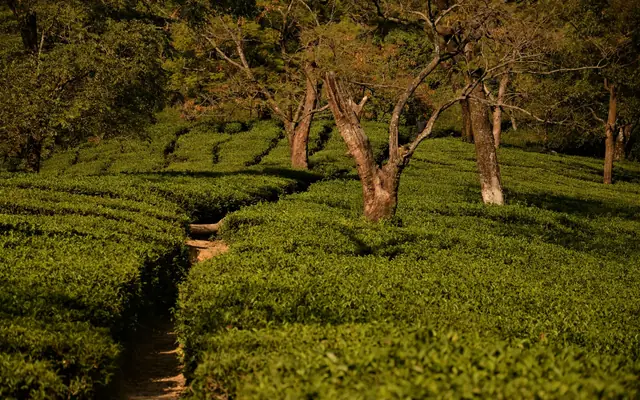
| Mattupetty — Korandakkad hills | Purple spreading over several acres of private tea-company land | 2 km trek from near High Range School, and permission from the plantation company is required | Photographers, walkers, anyone wanting fewer people |
| Munnar town, Nallathanni, Ikka Nagar | Flowers beginning to appear on roadside slopes | Open, no permit; visible from the road | Older travellers, a short evening stop |
| Meesapulimala, Edalimedu, Sevenmala, Gundamala | Expected to flower as the season progresses through September–October | Trekking terrain. Visitor numbers may be capped pending a carrying-capacity assessment | Fit walkers, serious photography |
| Eravikulam National Park | Not the 2026 population. Worth visiting for Nilgiri tahr and the Rajamala shola, not for kurinji this year | Regular park ticketing | Wildlife, families |
One arrangement worth knowing about: online visitor slots and extra KSRTC buses were planned for the bloom season, but as of the most recent reporting the final booking process had not been announced. If someone sells you a “confirmed kurinji entry ticket” months in advance, ask exactly what has been confirmed and by whom.
Planning to see the 2026 Neelakurinji bloom?
Tell us your dates, how many are travelling and the hotel standard you want. Our travel desk can build a private Munnar itinerary around the slopes that are actually flowering on your dates — and around the rest of your Kerala journey.
When to Go, and How Long It Lasts
Forest officials quoted in early September expected the hills to look like a continuous violet carpet within about ten days, given dry, sunny weather, and expected the display to hold through the end of September. Flowering on the higher slopes is expected to continue into October.
That is a forecast, not a schedule. Three honest caveats:
- Intensity varies with rain. A dry spell brings the colour on; heavy rain flattens flowers and closes trekking routes. 2026 has been an unusually dry season in Idukki, which is part of why the bloom has looked so good so early.
- The peak moves between slopes. Chokramudi went first. Mattupetty followed. The higher ground is expected later. There is no single fortnight that is right for everywhere.
- Arrangements change at short notice. Viewing-area hours, entry caps and permissions have all shifted during this season. Anything you are told in September may be different in October.
If you have not booked yet and you have a free choice of dates, the last week of September into the middle of October is the window we would aim at — late enough for the higher slopes, early enough to avoid betting everything on the tail of the bloom.
Update, 4 October 2026: with the 12 September forecast pointing to the second week of October, travel in the first ten days of the month if the bloom is the reason for the trip, and treat anything later as a bonus rather than a promise.
What the Weather Is Actually Doing
This is where most Kerala advice will mislead you this year. The standard line is that September is monsoon season: wet, green, cheap, and a gamble. September 2026 has not behaved that way.
In the first week of September, Kerala was running 3–4 °C above normal maximum temperatures on a weakened south-west monsoon. Punalur recorded 36.2 °C (4.3 °C above normal) and Kottayam 35.2 °C. The India Meteorological Department then forecast heavy rain returning around 10–12 September, with a yellow alert for Idukki — Munnar’s own district — on 11 September.
What that means for a traveller:
- Munnar itself stays comfortable. At roughly 1,600 m the high range does not get the plains heat. It is the drives up from Kochi and any lowland nights that feel it.
- Do not plan around a dry fortnight. A weak monsoon is not a cancelled one. It returns in bursts.
- Mornings are for viewpoints. In the high range, cloud usually builds through the day. First light to about 10am is when the colour reads properly and the ridges are clear.
- Carry for both. A light rain shell, shoes with grip for wet grass, and something warm for the early start. Munnar mornings sit in the mid-teens Celsius even in a hot September.
Our guide to travelling Kerala in the monsoon covers the wider trade-offs, and best time to visit Kerala sets September against the rest of the year.
Getting to Munnar
| Route | Approximate distance | Realistic driving time |
|---|---|---|
| Cochin International Airport (COK) → Munnar | ~110 km | 4 to 4½ hours |
| Aluva or Ernakulam railway station → Munnar | ~120–130 km | 4 to 5 hours |
| Madurai → Munnar (via Bodi ghat) | ~150 km | 4½ to 5 hours |
| Munnar → Thekkady (Kumily) | ~90 km | 3 to 3½ hours |
| Munnar → Alleppey | ~170 km | 4½ to 5 hours |
Two things people underestimate. The last 40 km into Munnar is continuous hairpin climbing — the distance is short and the time is not. And a flight landing after about 2pm turns into a mountain arrival in the dark, which is neither pleasant nor safe on a wet ghat road. If your flight is late, night in Kochi and drive up fresh in the morning. More on the approach in how to reach Kerala.
How Many Days You Need
2 nights / 3 days — the minimum that works
Arrive by early afternoon, one full day for the bloom slopes and a tea estate, leave after breakfast. This is enough only if you accept that one bad-weather morning costs you the whole trip. Suitable if Munnar is an add-on to a longer South India plan.
3 nights / 4 days — what we would recommend this season
Two full days on the ground gives you a second dawn if the first is clouded in — which, in a bloom year, is the difference between the photograph and the story about the photograph. Day one for Chokramudi and the Munnar side; day two for the Mattupetty and Korandakkad direction, with the estate and Echo Point in the afternoon.
6–8 nights — Munnar as part of Kerala
The classic pairing is Kochi → Munnar → Thekkady → Alleppey, and it needs six nights minimum to avoid being a driving holiday. A tighter and often better version drops Thekkady: Kochi (1) → Munnar (3) → Alleppey or Kumarakom (2), with a houseboat night in the middle. See our complete Kerala itinerary and the Munnar and Alleppey route for how the days fall.
Want Munnar and more of Kerala?
We can pair Munnar with Thekkady, Alleppey, Kochi or the Kerala coast depending on how many days you have and how much driving you are willing to do.
What Else Is Worth Your Time
- A working tea estate. Munnar is a tea landscape before it is a flower one. A plantation walk with someone who can explain plucking rounds and processing is the single most interesting hour in Munnar, bloom or no bloom.
- Eravikulam National Park. Not for kurinji this year, but the best place in the world to see Nilgiri tahr at close range. The park closes for a period in the calving season each year — confirm before you plan around it.
- Mattupetty and Echo Point. Half an hour each, busy by mid-morning, pleasant at eight.
- Top Station. The view down into Tamil Nadu, and historically one of the kurinji viewing points. Clear mornings only; by noon it is often inside a cloud.
- Kolukkumalai. Sunrise from the high tea estate, reached by jeep on a rough track. Genuinely spectacular, genuinely uncomfortable, not for everyone.
Who This Trip Suits
Couples and honeymoon travellers. Very well — provided you build in the early starts. The bloom slopes at dawn with a flask of tea is a better memory than a crowded viewpoint at eleven. See our Kerala honeymoon guide.
Families. Yes, with the caveat that the Korandakkad trek is a real 2 km walk on plantation ground, not a promenade. Younger children do better on the roadside stretches and at Chokramudi’s designated area.
Older travellers. Manageable if you choose the drive-up viewpoints and skip the treks. Tell your planner this before the itinerary is written, not after — the two versions of a Munnar day are quite different.
Photographers. This is the trip. Go for the higher slopes, go at first light, and give yourself three mornings rather than one. Bring something long — the compositions that work are compressed ridge lines, not wide angles.
Nature travellers. A once-in-twelve-years flowering event, a shola-grassland ecosystem, and endemic tahr within an hour of each other. Bring binoculars.
What Moves the Cost
We do not publish fixed package prices, because a private trip does not have a shelf price. What we can tell you is what actually moves the number, roughly in order of weight:
- Hotel category and location. A resort in the tea estates above Chithirapuram and a town hotel in Munnar are different holidays at different prices, and location matters more than the star rating for dawn starts.
- Season. A bloom year is not a normal September. Demand in Munnar this season is closer to peak than to shoulder.
- Duration and number of hotel changes. Every change of base is a half-day and a transfer.
- The vehicle. Whether one car and one driver stay with you throughout, or you are handed between local taxis at each sector.
- Party size. The car and the guide cost the same for two people as for four.
- Houseboat inclusion, and whether it is a shared, private, or premium boat.
- Guiding. A plantation walk with a knowledgeable guide, or a naturalist for the higher slopes, is a line item worth having.
Our Kerala trip cost guide breaks this down in more detail.
Should You Book Now?
Honestly: book the hotel now, keep the sightseeing flexible.
The case for moving is straightforward. This is a genuine twelve-year event, roughly 8,000 people visited one viewing area in its first week, and Munnar has a finite number of good rooms. The properties that are well placed for a dawn start are the ones that fill first.
The case for not over-committing is equally straightforward. Flowering intensity is weather-dependent, access arrangements have already changed several times this season, and the higher-slope caps are still being worked out. A plan that names the hill on day one and keeps day two open is more likely to get you the picture than a rigid schedule bought in advance.
What we would not do is pay now for a specific dated entry to a specific viewpoint, unless whoever is selling it can tell you exactly what has been confirmed and by which authority.
Planning a Private Munnar Trip With Itinerary Diary
Itinerary Diary Tour & Travels is a private tour operator based in Shimla, Himachal Pradesh, planning tailor-made journeys across India for families, couples and honeymoon travellers. We do not run fixed departures or shared coaches. Every itinerary is written around one party’s dates, pace and hotel preferences, with a private vehicle and a named travel designer for the trip.
For a Munnar bloom trip specifically, an itinerary can be built around which slope you want at dawn, whether the party can manage the Korandakkad walk, and how Munnar joins the rest of Kerala — Thekkady, Alleppey, Kochi, or a longer journey down the coast.
When you write to us, the four things that let us answer properly are: your dates, how many are travelling and their ages, the hotel standard you have in mind, and how much driving you are willing to do in a day. With those, a designer sends back an itinerary and a real quotation rather than a brochure.
Related reading: Kerala tour packages, the Kerala travel guide, and our journal piece on how to compare and time a Kerala trip in 2026.
Frequently Asked Questions
Is Neelakurinji still blooming in Munnar in October 2026?
Is Neelakurinji blooming in Munnar in 2026?
Isn’t the next Neelakurinji bloom supposed to be in 2030?
Where exactly can I see Neelakurinji in Munnar this year?
Can I see the bloom inside Eravikulam National Park?
Do I need a permit or ticket to see the flowers?
How long will the 2026 bloom last?
What are the entry fees for the Neelakurinji viewpoints in Munnar?
Is Munnar worth visiting after the Neelakurinji bloom ends?
Is September a good month to visit Munnar?
How many days do I need in Munnar for the bloom?
Can I combine Munnar with Alleppey or Thekkady?
Is the bloom suitable for elderly travellers or young children?
What should I carry?
Can Itinerary Diary plan a private Munnar trip for the bloom?
Planning a Kerala Trip in 2026?
Tell us your dates and what you actually want out of the trip — the flowers, the backwaters, the tea, or a slow week that includes all three. Private itinerary, handpicked stays, private transport, and one person who knows your booking from start to finish.
Tell us about your trip
Dates, party size, hotel standard and how you like to travel. That is all we need to start.
Sources & Last Checked
Bloom locations, the opening of the Chokramudi viewing area and the visitor figures come from Onmanorama’s reporting of 3 September 2026. The flowering-cycle dates for the Mattupetty–Kannimala and Eravikulam populations, and the note on planned online slots and possible visitor caps, are from reporting of 16 July 2026. Sanctuary details are from Kerala Tourism. September 2026 temperature and rainfall figures are from Onmanorama’s report of 8 September 2026 citing India Meteorological Department forecasts.
The 4 October update: the 25–30-day outlook, Korandakkad and Chokramudi fees, Chokramudi hours, the fine and the KSRTC buses are from Onmanorama’s report of 12 September 2026. The kurinji garden’s opening hours, camera permits and drone ban are from Onmanorama, 24 August 2026. The Meesapulimala cap and price are from Madhyamam, 17 August 2026. Child rates at Chokramudi differ between reports, so we have not quoted one.
A bloom is a living event and the arrangements around it are being made week by week. Viewing-area hours, entry caps, plantation permissions and road conditions have all changed during this season. Reconfirm anything time-sensitive close to your travel date rather than relying on any page, including this one.