If you are flying to India from North America or Europe this winter, the best weeks are late November to mid-March — and the two you should plan carefully around are the first half of November in Delhi and the north Indian plains.
That is the whole decision in one line. Below is the reasoning, the dates that matter for the 2026–27 season, and what to lock in first if you have not booked yet.
The short answer
| If you can travel | Verdict |
|---|---|
| Late Nov – mid Feb | The best of the Indian year. Cool, dry, clear. Book early. |
| Mid Feb – mid Mar | Equally good and warming up. Holi falls in this window in 2027. |
| Early Oct | Good, and quieter. The monsoon has just left; everything is green. |
| Late Oct – mid Nov | Workable, but sequence it deliberately — see the air quality section. |
| April onwards | The plains get very hot. Go to the Himalaya instead, or wait. |
Why the season runs October to March
India's tourist calendar is built around the monsoon, not around temperature. The rains withdraw from most of the country through September, and what follows is six months of dry, stable, largely cloudless weather. That is the window nearly every international visitor uses, and it is why flights and the better hotels price accordingly.
What surprises most first-time visitors from the US, Canada and Europe is how cold north India gets in the middle of it. Delhi in January is genuinely cold in the early morning, Rajasthan's desert nights drop sharply, and Himalayan hill stations are properly wintry. Pack layers rather than summer clothes — our India packing list covers it properly.
The south behaves differently. Kerala and Tamil Nadu are warm and humid all winter, and they catch a second, shorter monsoon in October and November. That is not a reason to avoid the south in winter — it is a reason not to start there in early November.
For how the whole year compares rather than just this season, see our best time to visit India guide.
The weeks to route around, and why
This is the part most travel companies leave out, so here it is plainly.
Every year, air quality across Delhi and the wider north Indian plains deteriorates sharply in the weeks around and after Diwali, and stays poor through much of the winter. The Centre for Science and Environment tracks this as a consistent early-winter pattern rather than a one-off. It is caused by a combination of seasonal crop-residue burning, cooler air trapping pollutants near the ground, falling wind speeds, and festival fireworks — not by any single thing.
It does not mean do not come. It means do not spend your first three days sightseeing on foot in Delhi in mid-November, which is exactly what a standard Golden Triangle itinerary has you doing. Diwali falls on 8 November 2026, so the sensitive window this season is roughly the first three weeks of November.
There are three sensible ways to plan around it, and we use all three depending on the traveller:
- Shift the dates. Arrive from late November onwards. Conditions improve markedly and you also miss the Diwali travel crush on roads and trains.
- Reverse the route. Land in Delhi, leave the same day, and do Rajasthan, Kerala or the south first. Return to Delhi and Agra at the end of the trip, by which point conditions are usually better.
- Start somewhere else entirely. Fly into Mumbai, Kochi or Bengaluru. The south and west are unaffected by the northern plains' winter air.
If anyone in your party has asthma or a respiratory condition, say so at the planning stage. It changes which cities we put at the front of the trip, not whether you can come.
This is the single most useful thing a planner does for a first India trip: sequencing the cities so the weather, the air and the festivals work for you rather than against you.
Month by month, for a long-haul visitor
| Month | North (Delhi, Agra, Rajasthan) | South (Kerala, Tamil Nadu) | Himalaya |
|---|---|---|---|
| October | Fresh and green early in the month; busier from mid-month | Second monsoon — wet | Excellent. Clear peak views |
| November | Cool and clear, but the air window applies | Improving late in the month | Cold, clearing; passes start closing |
| December | Cold mornings, perfect days. Peak season pricing | Warm, dry, the best month | Snow season begins |
| January | Coldest. Morning fog can delay flights and trains | Warm and dry. Peak | Deep winter, snow |
| February | The sweet spot — mild days, clear skies | Warm, dry, excellent | Snow, sunshine, fewer people |
| March | Warming fast; comfortable until mid-month | Hot and humid by late March | Spring. Roads reopening |
One practical January note: dense morning fog across the north regularly delays domestic flights and trains between roughly late December and late January. It is not dangerous, but it wrecks tight itineraries. If you travel in that window, leave slack between connections and avoid scheduling an early flight on the morning you fly home.
Dates worth planning around
| Date | What | Why it matters to you |
|---|---|---|
| Sun 8 Nov 2026 | Diwali | India's biggest festival. Beautiful, but roads, trains and flights are at their most crowded either side of it |
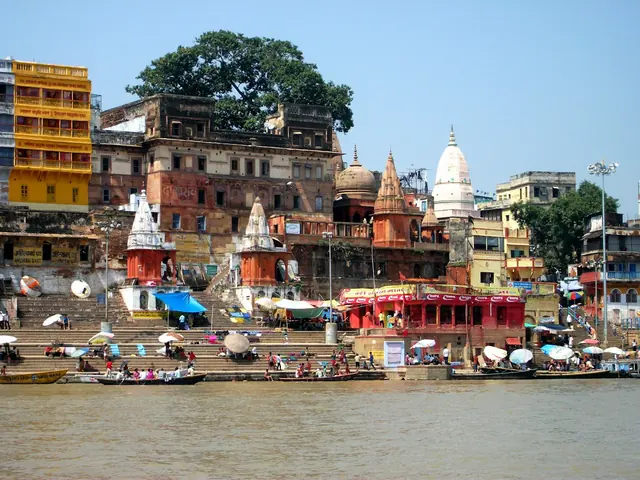
| Tue 24 Nov 2026 | Kartik Purnima | Dev Deepawali in Varanasi — thousands of lamps along the ghats. Also the closing day of the Pushkar Camel Fair in Rajasthan |
| Late Dec – 1 Jan | Christmas and New Year | Peak of the peak. Goa, Kerala and Rajasthan hotels sell out and price at their annual highest |
| 14–17 Jan 2027 | Makar Sankranti / Pongal | Kite festival in Gujarat; harvest festival across Tamil Nadu |
| Sat 6 Mar 2027 | Maha Shivratri | Extraordinary in Varanasi and in Mandi, Himachal Pradesh |
| Mon 22 Mar 2027 | Holi | The one festival most Western visitors want to build a trip around. Holika Dahan is the evening before, Sunday 21 March |
The Pushkar Camel Fair builds towards Kartik Purnima, so it runs in the second half of November 2026. Rajasthan Tourism publishes the exact programme closer to the time — confirm before you book non-refundable travel around it.
What to book now, and in what order
Long-haul trips to India have a longer lead time than most people expect, because the constraint is rarely the flight — it is the small number of genuinely good hotels in each place.
- International flights — four to six months out for Christmas and New Year, three to four months for the rest of the season.
- The itinerary itself. Decide the route before you book hotels, because the route determines which cities you need beds in and for how long. This is the step people skip.
- Hotels. The heritage properties, palace hotels and good boutique stays are small. For a December or February trip, three months out is comfortable; for Christmas week, six.
- Trains, if you want them. Indian Railways opens reservations 60 days before departure and the good classes on popular routes go quickly.
- Your e-Visa. Last, not first — see below.
For what a private trip actually costs, our India trip cost guide sets out the components. Hotel category and how many internal flights you take move the number far more than trip length does.
Not sure which route suits your dates?
Tell us your dates, the number of travellers and your preferred hotel category — we will suggest a private itinerary sequenced around the season.
The visa, in plain terms
US, UK, Canadian and most European passport holders are eligible for India's e-Tourist Visa, applied for online. The government offers 30-day, one-year and five-year variants, all multiple-entry, with the one-year and five-year versions capped at 180 days of stay per calendar year.
Three details that catch people out:
- You can apply up to 120 days before travel, and must apply at least four days before arrival. Do not leave it to the last week.
- Your passport needs at least six months of validity at the time you apply.
- Apply only through the official government portal. A large number of lookalike commercial sites charge several times the government fee for the same thing.
Our India tourist visa guide walks through the application itself. Rules do change, so check the official portal for current requirements before you apply.
How long to come for
| Nights in India | What fits comfortably |
|---|---|
| 7–8 | Golden Triangle only — Delhi, Agra, Jaipur. Enough, but no margin |
| 10–12 | Golden Triangle plus Rajasthan, or plus Varanasi, or plus Kerala |
| 14–16 | The comfortable first trip. North and one contrasting region, unhurried |
| 21+ | North, south and the Himalaya, or a genuinely slow single region |
The most common planning error we see from overseas visitors is fitting five cities into ten days. India's distances are long, its roads are slower than the map suggests, and a domestic flight consumes half a day by the time you have done both airports. Two well-chosen regions beat four rushed ones every time.
If the Himalaya interests you — and it is the part of India most first-time itineraries skip entirely — our office is in Shimla, in Himachal Pradesh. Winter there is snow, pine forest and very few foreign visitors. See Himachal tour packages, or Ladakh if you are thinking of the high Himalaya in summer instead.
Five mistakes first-time visitors make
- Booking the flight before the route. Flying into and out of Delhi forces a loop. Open-jaw tickets — into Delhi, out of Mumbai or Kochi — often cost the same and save you two internal flights.
- Underestimating drive times. Delhi to Agra is roughly 230 km and takes most of a morning. Anything described as "just three hours" usually is not.
- Choosing hotels by star rating alone. In India, location and management vary enormously within the same category. This is where a planner who has actually stayed in the property earns their fee — see our luxury hotels guide.
- Assuming trains are romantic by default. Some are superb; some are an eleven-hour endurance test. The luxury train journeys are a different proposition entirely from ordinary intercity rail.
- Worrying about the wrong risks. Most first-time anxiety concentrates on safety when the real trip-spoilers are pacing, food caution in the first 48 hours, and bad sequencing. Our is India safe for tourists page addresses the safety question honestly.
Frequently Asked Questions
When is the best time to visit India from the US or Europe?
Is Delhi's air quality bad in winter, and should I avoid it?
How far in advance should I book a trip to India?
How early can I apply for an India e-Tourist Visa?
Do US, UK and Canadian citizens get an e-Visa for India?
How many days do I need for a first trip to India?
Is it cold in India in December and January?
Will fog disrupt my flights or trains?
When is Holi in 2027?
Can Itinerary Diary arrange a private trip for overseas visitors?
Planning Your India Trip
India rewards planning more than almost anywhere. The difference between a good first trip and a frustrating one is rarely the destinations chosen — it is the order they are visited in, the honesty of the drive times, and whether the hotels were picked by someone who has been inside them.
We are based in India, not abroad, and we design private, tailor-made journeys — your own vehicle and driver for the whole trip, hotels chosen individually, local guides where they add something, and someone reachable while you are travelling.
Tell us your dates, the number of travellers and your preferred hotel category — we will suggest a private itinerary.
Start with your dates
Send us when you can travel and roughly how long you have. We will tell you honestly what fits and what does not, before you book anything.
Travel advisors and tour operators planning India for clients can work with us directly — see travel trade.
e-Tourist Visa rules are from the Government of India's official e-Visa portal, indianvisaonline.gov.in. Festival dates follow the Hindu lunisolar calendar and change each year: Diwali 8 November 2026 and Kartik Purnima 24 November 2026; Makar Sankranti and Pongal 14–17 January 2027; Maha Shivratri 6 March 2027; Holika Dahan 21 March and Rangwali Holi 22 March 2027. The winter air quality pattern across Delhi and the north Indian plains is documented by the Centre for Science and Environment. Visa rules and festival programmes can change — confirm current details before booking non-refundable travel.