A private tour of Delhi, Agra, Jaipur and Udaipur is one of the most comfortable ways for travellers in their sixties and seventies to see India. Make it 12 nights rather than 8. Keep every road day under about five hours. Fly the long Jaipur–Udaipur leg. And choose late November to mid-December or February rather than Christmas week. With your own car, driver and guide, the pace is set around you, not around a coach schedule.
This guide is for retired couples and friends from the UK, Australia, the United States and Europe, and for families booking a trip for their parents. It covers when to come this winter, a route built to limit tiring days, which sights involve stairs and which do not, how to choose hotels, health and insurance, flights and the visa, and what drives the cost. Our general India tours for senior citizens page covers other regions and pilgrimages. This one goes deep on the Golden Triangle and Rajasthan for overseas visitors.
The short answer
| Best weeks | Late November to mid-December, and February to early March |
| Weeks to avoid if you can | Early November (Delhi's worst air; Diwali is 8 November 2026) and 24 December–2 January (peak prices and crowds) |
| How long | 12 nights is comfortable; 10 is the minimum at an easy pace |
| Route | Delhi → Agra → Jaipur → fly to Udaipur, with Jodhpur as an optional addition |
| Daily limit | About five hours on the road at most, with a rest day every three or four days |
| Transport | Private car with driver throughout; one domestic flight; the train to Agra only if stairs at stations are no problem |
| Hotels | Lifts or ground-floor rooms, short walks from the car to the room, proper heating for winter nights |
Is India a good choice after 60?
Yes, for most travellers who are comfortable walking for 20–30 minutes at a time and climbing the occasional flight of steps. The Golden Triangle and Rajasthan are the most visited part of India. The roads between the cities are good, the hotels range from comfortable to world-class, and a private tour removes the hardest parts: luggage, early starts, queues and navigating on foot.
India is less suitable, or needs more careful planning, if you rely on a wheelchair full-time, cannot manage any steps, or have a respiratory condition and can only travel in early November. None of these rules a trip out. They change the route, the dates and the hotels, and they are exactly what to tell your planner at the start.
The best weeks this winter
Rajasthan's season runs from October to March. For older travellers, three things narrow the best weeks:
- Air quality in early November. Air quality across Delhi and the northern plains worsens sharply around and after Diwali every year. Diwali is on 8 November 2026, so the first three weeks of November are the ones to route around. Australia's Smartraveller advice notes that pollution in parts of India can reach hazardous levels between October and February. If anyone has asthma or a heart or lung condition, say so at the start: we would begin in Rajasthan, not Delhi, or move your dates.
- Fog from late December to January. Morning fog across north India regularly delays flights and trains in this period. It rarely ruins a trip, but it makes early departures unreliable, and those are the days that tire people most.
- Christmas to New Year. This is the most expensive and crowded week of the season, with minimum stays and compulsory gala dinners at many hotels.
Most people picture India in December. For older travellers, February is often the better month: the days are warmer, the desert nights are less bitter, morning fog has usually eased, and hotel rates are softer than over the holidays. Late November to mid-December is the other sweet spot, after the air improves and before the festive rush.
Our winter 2026–27 planning guide goes through the season month by month.
An easy-pace route, leg by leg
The standard Golden Triangle squeezes Delhi, Agra and Jaipur into five or six nights, with a long road day almost every other day. At an easy pace, the same sights need more nights, and the long Jaipur–Udaipur drive is best replaced by a short flight. This is the route we would suggest for a first trip:
| Nights | Where | Getting there | Effort |
|---|---|---|---|
| 2 | Delhi | Met at the airport; hotel close to the airport side of the city | Light — the first day is for recovering from the flight |
| 2 | Agra | About 3½–4 hours by road on the expressway, or about 1 hour 40 minutes on the Gatimaan Express train | Moderate |
| 3 | Jaipur | About 4½–5 hours by road, with a stop at Fatehpur Sikri or the Abhaneri stepwell to break it | Moderate |
| 3 | Udaipur | About 1 hour by air, instead of 6–7 hours by road | Light |
| 2 | Jodhpur (optional) or a rest stay | About 5–6 hours by road via the Ranakpur temple, or stay longer in Udaipur | Moderate to full |
Fly home from Udaipur through Delhi or Mumbai, so you never drive back the way you came. Two rules make the biggest difference to how you feel on day ten:
- No sightseeing on the day you land. Long-haul flights from the UK, Europe, the US or Australia land at all hours. The first day is for sleep, a short walk and an early dinner.
- Do not stack a long drive and a big sight on the same day. Arrive, rest, and see the place the next morning when it is cooler and quieter.
On the train: the Gatimaan Express is fast and comfortable, but Indian stations involve stairs, footbridges and crowded platforms. With a porter and a guide it is manageable for most travellers. If stairs are difficult, the car is easier. Our Golden Triangle and Rajasthan itinerary shows the full day-by-day version, and our Rajasthan planning guide for UK and European travellers compares longer routes.
Want the pace set around you?
Tell us your ages, how far you are comfortable walking, and when you would like to travel. We will build the route around it, with the long legs flown and the rest days where they help most.
The sights, graded by effort
Most of the classic sights can be enjoyed without climbing everything. The question is which parts involve stairs and uneven ground, so you can choose before you arrive rather than at the foot of a staircase. This is general guidance; conditions at monuments change, and your guide will adapt on the day.
| Sight | What is easy | What involves effort |
|---|---|---|
| Taj Mahal, Agra | Free battery buses and paid golf carts run from the parking areas to the gates, and wheelchairs are available at the entry gates. The gardens and the classic view are on the level | The mausoleum itself stands on a raised marble platform reached by steps. Closed every Friday |
| Agra Fort | The main courtyards and the views towards the Taj | Long ramps, uneven paving and some steps; allow time and rest stops |
| Amber Fort, Jaipur | Jeeps take visitors up to the fort, avoiding the steep walk | Inside, there are stairs and uneven floors between the courtyards and palaces; choose the main halls and leave the upper levels |
| City Palace and Jantar Mantar, Jaipur | Mostly flat courtyards and open grounds | Little; some museum rooms upstairs |
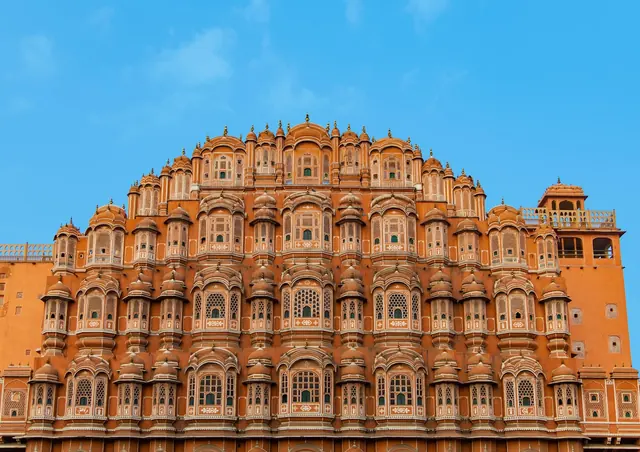
| Hawa Mahal, Jaipur | The famous façade is best seen from the street or a café opposite | Inside are ramps and narrow levels; worth skipping if mobility is limited |
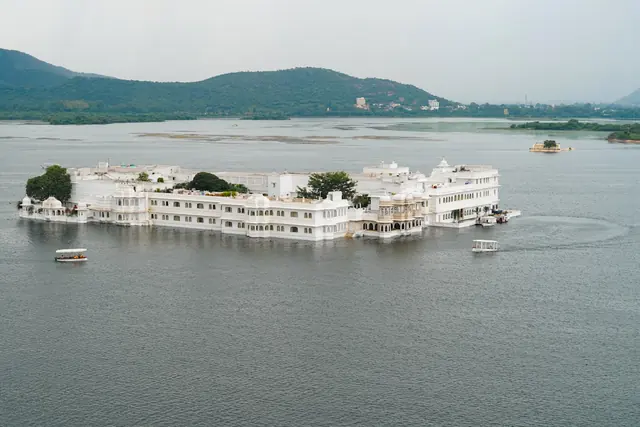
| Lake Pichola, Udaipur | A boat ride at sunset: seated, calm and one of the highlights of the trip | A short walk and a few steps to the jetty |
| City Palace, Udaipur | The views from the courtyards | Many stairs and narrow passages; plan a short visit and a rest afterwards |
| Mehrangarh Fort, Jodhpur | A lift takes visitors up into the fort, avoiding most of the climb | Upper galleries and ramparts involve stairs |
Choosing hotels
Rajasthan's palace and heritage hotels are the reason many people come, but historic buildings were not designed with lifts. Some of the most beautiful involve long corridors, ramps and steps between the car and the room. Before booking, ask:
- Is there a lift, or can we have a ground-floor room?
- How far is the room from where the car stops? In large palace hotels this can be a long walk; buggies are available at some.
- How are rooms heated? Desert nights in December and January are cold.
- Is the bathroom a walk-in shower or a bath with a high side?
A good plan mixes one or two landmark palace nights with modern heritage-style hotels that have lifts and level access. Our guide to the best palace hotels in India covers the landmark stays.
Health, comfort and insurance
- See your doctor before you book, especially for vaccinations and any long-term conditions. Bring enough medication for the whole trip plus a week, in your hand luggage, with a copy of your prescriptions.
- Water and food: drink bottled or filtered water only, and eat in the hotels and restaurants your planner recommends for the first few days. Most stomach upsets come from tiredness, heat and over-eating as much as from food itself.
- Layers: days are warm and sunny, mornings and nights are cold from December to February. A light down jacket, a hat and sun protection are all useful.
- Medical care: Delhi, Jaipur, Jodhpur and Udaipur have large private hospitals. Your planner and driver should know where the nearest one is at each stop.
- Travel insurance: check it covers your age, any pre-existing conditions you have declared, and medical evacuation. Some policies set upper age limits or charge more after 70 or 75, so arrange it before you pay for the trip.
Flights and the visa
Every route here starts in Delhi. Typical non-stop flying times:
| From | Non-stop options | Time in the air |
|---|---|---|
| UK | London Heathrow: British Airways and Air India | About 8–9 hours |
| Europe | Frankfurt and Munich (Lufthansa), Zurich (SWISS), and Air India from several European capitals | About 7–9 hours |
| USA | Air India from New York JFK, Newark, Chicago and San Francisco | About 14–16 hours |
| Australia | Air India from Sydney and Melbourne; Qantas has run a seasonal Melbourne–Delhi service in recent winters | About 12–13 hours |
On the longest flights, a premium economy or business seat is worth more after 60 than any hotel upgrade. Arriving rested changes the first three days. Our guide for travellers from the USA, Canada, Europe and Japan has more on flights and jet lag.
The visa: UK, US, Australian and European passport holders can apply online for India's e-Tourist Visa on the official government site, indianvisaonline.gov.in, between 120 and 4 days before arrival. Passports need at least six months' validity. Use only the official site: look-alike websites charge more for the same visa. See our India tourist visa guide.
Car, driver and guide
The car matters more than people expect. Ask for a vehicle with a comfortable step-in height, room to stretch, and space for luggage that keeps the cabin clear. Ask too for a driver who speaks some English and knows that the pace is yours. At each major sight, a local English-speaking guide can choose the route through the monument, find seats and shade, and cut the visit short without fuss when you have seen enough. Wheelchairs can be arranged at major monuments, and the Taj Mahal provides them at its gates.
Our guide to touring India with a car and driver explains how it works, what is included and tipping.
Safety and government advice
The Golden Triangle and Rajasthan are India's most visited circuit, and a private tour with a known driver and guide is the most protected way to travel it. Read your own government's advice before you book. Australia's Smartraveller advises a high degree of caution across India. The US State Department rates India at Level 2, exercise increased caution. Both name Jammu and Kashmir and the India–Pakistan border area as places to avoid, and none of the cities on this route is near them. Our page on whether India is safe for tourists covers the practical side.
What decides the cost
A private tour has no fixed price, because it is built around your dates, hotels and party. For older travellers, the cost usually goes up a little compared with a standard tour, because of extra nights, a flight instead of a long drive and better rooms, while the days themselves become far easier. The main factors:
- Hotel level: heritage and four-star, landmark five-star, or the iconic palaces. This is the biggest single factor.
- Dates: Christmas to New Year is the most expensive time; late November, early December and February are better value.
- Length: the number of nights and hotel changes.
- Party size: the car, driver and guides cost the same for two people as for four, so two couples travelling together pay noticeably less each.
- Extras: domestic flights, a tiger safari at Ranthambore, private experiences.
International guests are quoted in US dollars, itemised, with international flights, visa and insurance not included. Our Rajasthan tour cost guide explains what moves a quotation.
Mistakes to avoid
- Booking the 8-night version of the Golden Triangle. It is designed for speed. Add nights rather than sights.
- Sightseeing on the day you land. The trip goes better when the first day is for rest.
- Driving Jaipur to Udaipur. Six to seven hours in a car costs you a day; the flight takes about an hour.
- Planning the Taj Mahal for a Friday. It is closed to visitors every Friday.
- Choosing a palace hotel from photographs alone. Ask about lifts, stairs and how far the room is from the car.
- Starting in Delhi in early November if anyone has a heart or lung condition. Change the dates or start in Rajasthan.
- Buying travel insurance after paying for the trip. Check age limits and pre-existing condition cover first.
Frequently Asked Questions
Is India suitable for travellers over 60?
How many days do seniors need for the Golden Triangle and Rajasthan?
What is the best time for older travellers to visit Rajasthan?
Is the Taj Mahal accessible for elderly visitors?
Can we avoid long drives in Rajasthan?
Should we take the train from Delhi to Agra?
Are palace hotels in Rajasthan suitable for seniors?
Is the air in Delhi a problem for older travellers?
What travel insurance do seniors need for India?
Can you arrange wheelchairs or extra help?
Planning Your Trip
India rewards an unhurried pace more than any other kind of trip, and travellers who come in their sixties and seventies often see more than those who rush. The decisions that matter are made before you book: which weeks, how many nights, which legs to fly and which hotels to trust with your comfort.
We plan private, tailor-made tours of the Golden Triangle and Rajasthan for international guests, with your own car and driver throughout, English-speaking guides, hotels chosen for access as much as atmosphere, and support across time zones. Quotations are in US dollars and fully itemised.
Tell us your ages, your travel month and how far you are comfortable walking — we will suggest a private itinerary at the right pace.
Planning a trip for yourselves or your parents?
Send us your dates and a few words about mobility and interests. We reply with a suggested route, hotels and an itemised quotation, usually within one working day.
More for international travellers: India tours for international travellers · Golden Triangle tour guide · Rajasthan tour packages
Taj Mahal access, Friday closure and wheelchair availability are from the Agra district administration's official page. Smartraveller and US State Department advice levels are as published at the time of writing. Flight routes are as currently scheduled and change by season; check before you book. Drive times are typical for a private car with a professional driver and vary with traffic. Monument access can change, so your guide confirms on the day. This guide is general travel information, not medical advice. Checked 18 October 2026.