This guide is for travellers in Britain and Europe who have decided that Rajasthan is the India they want to see, and who now need to make the practical decisions: how long to go for, which cities to combine, whether the Taj Mahal belongs in the trip, what a private chauffeur-driven journey really involves, what it costs, and what to ask before paying a deposit to a company several thousand miles away.
It is not a list of sights. The sights are covered in our Rajasthan travel guide; what most people struggle with is the shape of the trip, and the shape decides whether you come home rested or having spent a large part of your holiday in the car. Rajasthan is a state the size of Germany with its great cities spread across it, and a good holiday here is not about fitting the maximum number of places into the minimum number of days. It is about designing the route properly.
The quick answer
| Question | Short answer |
|---|---|
| How long? | 7–8 nights for the three great cities (Jaipur, Jodhpur, Udaipur); 10–12 nights to add the desert or tigers; 12–14 nights if you also want Delhi and the Taj Mahal |
| When? | October to March. November to February is the sweet spot and also the busiest; Christmas and New Year are the peak of the peak |
| Core cities | Jaipur, Jodhpur and Udaipur, in that order, driving west then south |
| Add Jaisalmer? | Only with 10 nights or more, or by using the winter flights. It is 285 km beyond Jodhpur, in the wrong direction for Udaipur |
| Add Ranthambore? | When you have 10 nights or more and genuinely want tigers; two nights and at least two safaris, best placed between Agra and Jaipur or as a loop from Jaipur |
| Private or group? | Private for couples, families and anyone who wants to set their own pace; the price gap is smaller than most people assume once you compare hotel categories like for like |
| Planning rule | Two nights minimum in each city, no more than one long drive every other day, and a still day somewhere in the middle |
How many days do you really need in Rajasthan?
Seven or eight nights is the honest minimum for a first visit that covers Jaipur, Jodhpur and Udaipur without rushing. Ten to twelve nights lets you add either Jaisalmer and the Thar Desert or a tiger safari at Ranthambore. Twelve to fourteen nights is what a first trip to India from Europe usually needs if Delhi and the Taj Mahal are also on the list, and it is the length we would suggest for most people making the journey for the first time.
The reason is geography rather than the number of sights. Jaipur to Jodhpur is roughly 335 km; Jodhpur to Udaipur roughly 260 km by the direct road and closer to 330 km if you go the scenic way through Ranakpur; Jodhpur to Jaisalmer another 285 km into the desert. On Indian roads those are five- to seven-hour days once you include a stop for lunch and a monument on the way. Every city you add is a driving day you also add, and a driving day is not a sightseeing day, whatever the brochure implies.
Three planning rules follow from this. First, give each city at least two nights: one night means you arrive in the afternoon, see one thing, and leave the next morning, which is how the same fort ends up half-remembered. Second, alternate driving days with full days; two long transfers back to back is how tiredness sets in by the middle of the week. Third, leave one day in the trip with nothing planned, ideally in Udaipur, where doing nothing is a pleasure in itself. And after an overnight flight, leave the first day largely empty.
Which Rajasthan cities work best together?
The state's great cities form a rough arc. Jaipur sits in the east, an easy drive from Delhi and Agra. Jodhpur is 335 km to the west. Udaipur is 260 km south of Jodhpur, and Jaisalmer 285 km north-west of it, on the edge of the Thar. The classic route runs Jaipur → Jodhpur → Udaipur, which is a natural line with no backtracking and ends in the city best suited to a slow final day. Everything else is added to that line, and each addition should earn its place.
Jaipur
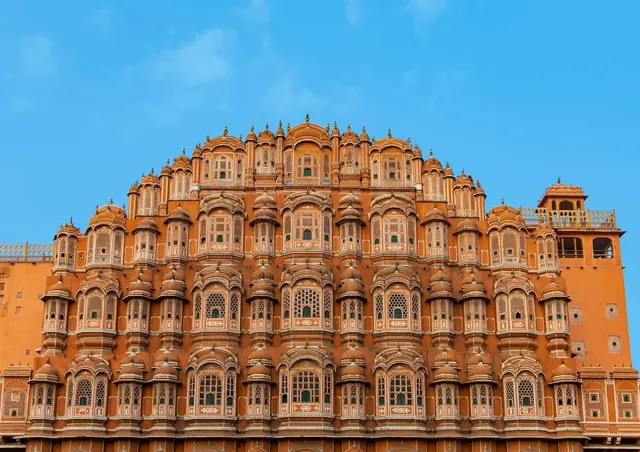
The natural start, and the city that connects Rajasthan to the rest of North India. Two nights is enough for Amber Fort, the City Palace, the old walled city and its bazaars; three if you want to add a morning at a block-printing workshop or a day trip to the stepwell at Abhaneri. At Amber Fort, an early private visit with a good guide changes the experience entirely.
Jodhpur
The most dramatic of the cities, with Mehrangarh Fort rising from a rock above the blue-painted old town. Two nights: one for the fort and the old city, one to breathe. It is also the junction city: from here you go on to Jaisalmer and the desert, or Udaipur and the lakes.
Udaipur
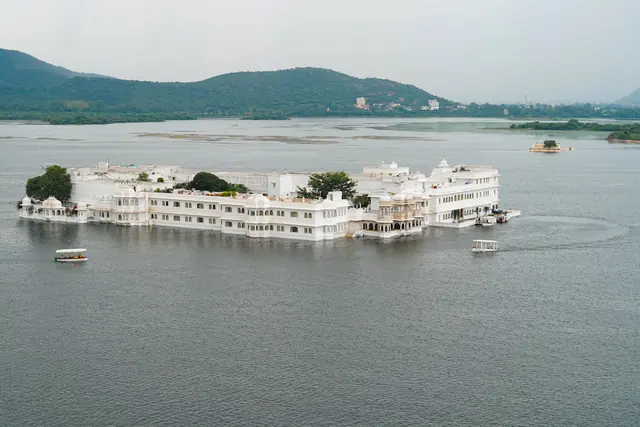
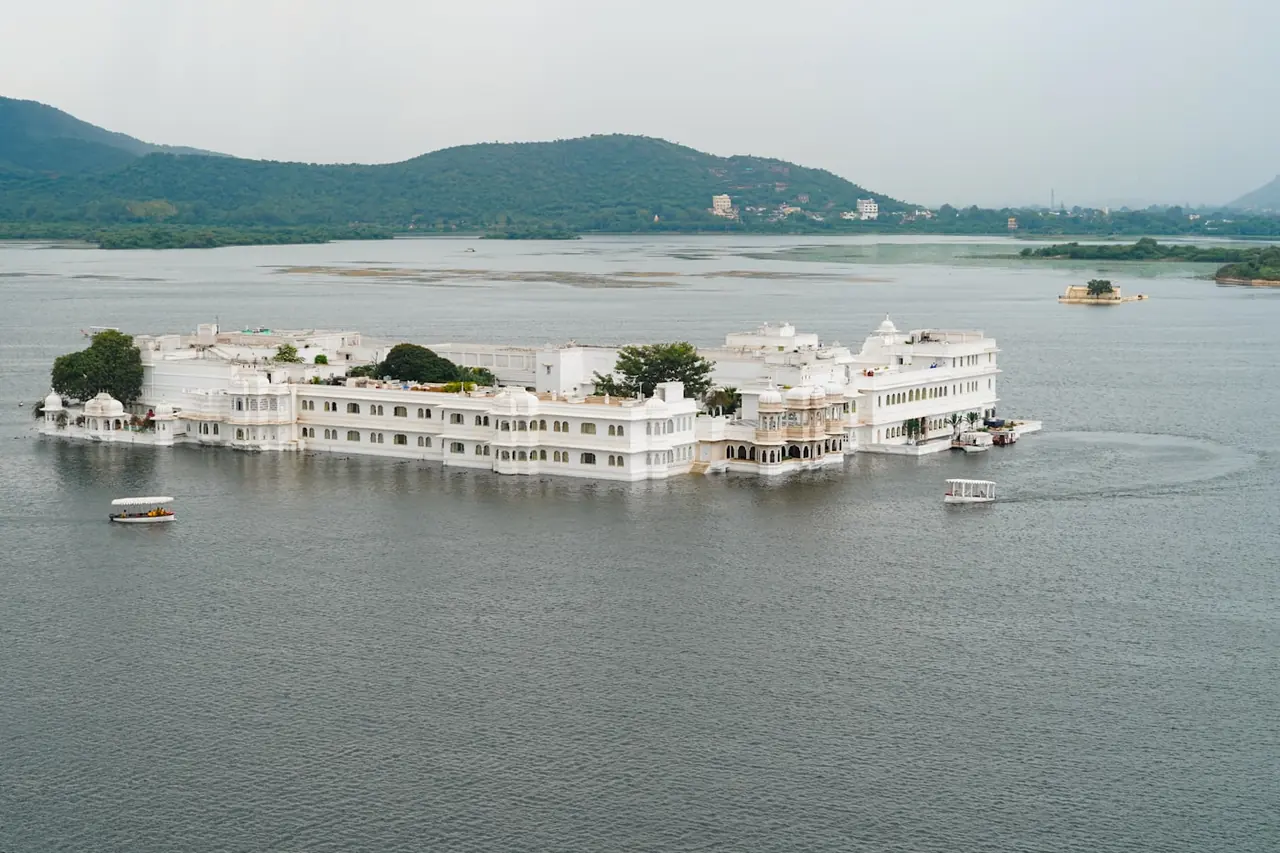
The city to end in. Its palaces sit around Lake Pichola, its hotels are among the finest in India, and its pace is gentler. Two nights minimum, three if you can, and this is where the still day belongs: a morning on the water, an afternoon at a rooftop table, nothing more ambitious than that. Udaipur has an airport with regular connections to Delhi and Mumbai, which makes it the sensible place to finish and fly out.
Jaisalmer
Worth the extra travel time only if you have the nights to pay for it. The living fort and the Thar dunes are unlike anything else in Rajasthan, but Jaisalmer is 285 km beyond Jodhpur with no sensible onward road to Udaipur, so it costs a five-hour drive out and either a drive back or a flight. Jaisalmer's airport has winter flights to Delhi, Mumbai, Jaipur and Ahmedabad — they ran October to March in 2025–26 and are expected to resume in October 2026, but they are seasonal and must be confirmed when you book — which lets you drive in and fly out. Give it two nights, one of them at a well-run desert camp, and do not attempt it on a trip shorter than ten nights.
Pushkar
A holy lake town three hours west of Jaipur, on the road to Jodhpur. For most travellers it is a stop rather than a stay: two hours for the ghats and the Brahma temple breaks the Jaipur–Jodhpur drive nicely and leaves no need for a hotel. The exception is the Pushkar Fair, which in 2026 runs from 17 to 24 November, when the town fills with camel traders, pilgrims and photographers and a night or two becomes a highlight of the trip, provided the hotel is booked many months ahead.
Ranthambore
One of the better places in India to see a wild tiger, and conveniently placed between Agra and Jaipur, about three and a half hours from either. All ten zones are open from 1 October to 30 June; in the monsoon only the outer zones operate. It belongs in a trip of ten nights or more when you want the safari for its own sake: two nights and at least two safaris give a fair chance of a sighting, which is never guaranteed. Book safaris well ahead in peak season and let the rest of the itinerary bend around them.
Shekhawati's painted towns, Bikaner, Bundi and the leopard country around Jawai reward a second visit or a longer first one. Ranakpur's Jain temples and the fort at Kumbhalgarh are the exception: they lie on the scenic road between Jodhpur and Udaipur and can be seen on the way.
Sample Rajasthan itineraries for 5, 7, 10, 12 and 14 days
These are shapes, not packages. Every one of them is changed for the travellers who take it, and the right one for you depends on your dates, your interest in the desert or tigers, and how much of the trip you want to spend still.
| Nights | Route (nights) | Suits | Pace | Leave out |
|---|---|---|---|---|
| 5–6 | Jaipur (2) → Pushkar stop → Udaipur (3); or Jaipur (2) → fly → Udaipur (3) | A first taste; couples with limited leave; an add-on to a business trip | Comfortable if flown; busy if driven | Jodhpur — three cities in six nights is a transfer schedule |
| 7–8 | Jaipur (2–3) → Pushkar stop → Jodhpur (2) → Ranakpur en route → Udaipur (3) | Most first-time visitors; honeymooners; families with older children | Relaxed: two drives, five full days | Jaisalmer or Ranthambore — both push the trip to ten nights |
| 9–11 | Jaipur (2) → Jodhpur (2) → Jaisalmer (2, one on the dunes) → fly or drive → Udaipur (3) | Desert-seekers; photographers; second-time visitors | Moderate: one long desert leg, best broken with the winter flight | Delhi and Agra — keep this a Rajasthan trip |
| 10–12 | Delhi (1–2) → Agra (1) → Ranthambore (2, optional) → Jaipur (2) → Jodhpur (2) → Udaipur (3) | First trip to India from the UK or Europe; anyone who wants the Taj Mahal | Busy first half, gentle second half | Jaisalmer — twelve nights already has four cities |
| 12–14 | Delhi (1) → Agra (1) → Jaipur (3) → Jodhpur (2) → rural palace near Ranakpur (1) → Udaipur (3), plus Jaisalmer or Ranthambore | The whole story without fatigue; mature travellers; a milestone trip | Slow by design; every long drive followed by a full day | A second desert or wildlife stop — choose one |
The seven-night classic is the shortest trip that feels complete. The twelve- to fourteen-night version is what a first India holiday from Europe should look like when the Taj Mahal is non-negotiable: the Golden Triangle in the first four days, then Rajasthan at a proper pace. Our seven-day Rajasthan itinerary shows the classic route in day-by-day detail; the longer routes are on our Rajasthan tour packages page, where each one can be reshaped around your dates.
Planning your own Rajasthan route?
Tell us your dates, the number of travellers and the places you would like to see, and our travel team will suggest a shape that fits — with indicative price bands and no obligation.
Should you combine Rajasthan with Delhi and the Taj Mahal?
For a first trip to India, usually yes. Almost every flight from London, Manchester, Paris, Frankfurt or Amsterdam lands in Delhi, and Agra is a four-hour drive from there on the Yamuna Expressway. Because Agra sits between Delhi and Jaipur, the Golden Triangle becomes the first act of a Rajasthan holiday rather than a separate trip.
The way to do it well is to keep it short. One night in Delhi to recover from the flight, one night in Agra for the Taj at sunrise, then on to Jaipur with a stop at Fatehpur Sikri or the Abhaneri stepwell on the way. Two nights in Agra are rarely worth it. Remember that the Taj Mahal is closed to visitors on Fridays, which needs to be built into the plan rather than discovered on the day. Our Golden Triangle tour guide covers the three cities in detail.
If you have already seen the Golden Triangle, or you simply prefer to spend every night in Rajasthan, fly into Jaipur or Udaipur via Delhi or Mumbai and skip it entirely. Rajasthan on its own, for ten to twelve nights, is a fuller and calmer holiday than the Golden Triangle plus a compressed Rajasthan.
How much time do you actually spend travelling between cities?
More than most itineraries admit. The times below are typical door-to-door driving times in the cool season with one stop, in a private car with a driver who knows the road. They lengthen in the heat, at festival times and when a monument is added; plan on the upper figure.
| Leg | Distance | Driving time | Stop en route |
|---|---|---|---|
| Delhi → Agra | 230 km | 4 h | — |
| Agra → Jaipur | 240 km | 4–5 h | Fatehpur Sikri; Abhaneri stepwell |
| Delhi → Jaipur | 270 km | 4–5 h1 | — |
| Jaipur → Ranthambore | 180 km | 3–4 h | — |
| Jaipur → Pushkar | 150 km | 3 h | Pushkar itself |
| Jaipur → Jodhpur | 335 km | 6 h | Pushkar; Ajmer |
| Jodhpur → Jaisalmer | 285 km | 5 h | Osian temples |
| Jodhpur → Udaipur, direct | 260 km | 5 h | — |
| Jodhpur → Udaipur via Ranakpur and Kumbhalgarh | 330 km | 7–8 h2 | Ranakpur; Kumbhalgarh |
| Jaipur → Udaipur | 395–410 km | 6.5–8 h3 | Chittorgarh Fort |
1 The new expressway sections have shortened this, but clearing Delhi still takes time. 2 Including the two visits; the Ranakpur temple opens to visitors around midday, so leave Jodhpur or Udaipur by mid-morning. 3 Better flown, or broken with a night at Pushkar or Chittorgarh.
Two practical conclusions. Any leg over about 300 km is a full day and should be treated as one, with an early start, a proper lunch stop and an arrival in daylight. And a domestic flight is worth its cost on exactly two legs: Jaisalmer back to Udaipur (via the winter flights) and, for anyone short of time, Jaipur to Udaipur.
This is where designed and assembled itineraries part company. An assembled itinerary lists Jaipur, Pushkar, Jodhpur, Jaisalmer, Udaipur and Ranthambore in nine days; a designed one counts five drives of five hours or more in those nine days and takes two places out.
Private Rajasthan tour vs group tour
Escorted group tours of Rajasthan exist at every price and some are very well run. They suit solo travellers who want company and anyone for whom price per night is the deciding factor; the trade-offs are a coach timetable, hotels chosen for their ability to take forty people, and sights seen at the hour the group arrives rather than the hour they are at their best.
A private chauffeur-driven journey means something specific. You have a car and a driver for your party alone, the same driver from first day to last, who handles the roads, parking, fuel and timing while you look out of the window. The itinerary is written around you: Amber Fort at eight before the coaches, a lie-in in Udaipur, a detour because the driver mentioned a village and you were curious. Guides are booked city by city, and hotels are chosen for your taste rather than the coach's needs, which is how the twenty-room havelis and small palaces come into reach.
| Private, chauffeur-driven | Escorted group tour | |
|---|---|---|
| Pace and timing | Yours; changed on the day if you wish | Fixed programme |
| Hotels | Any category, including small heritage properties | Larger hotels that can take a group |
| Sightseeing | Early or late to avoid crowds; private guides at major sites | Group timings; one guide for everyone |
| Company | Your own party | Built-in companions |
| Cost | Higher per night at the same hotel grade; the gap narrows for couples and families sharing one vehicle | Lower per person, especially for solo travellers |
| Best for | Couples, honeymooners, families, mature travellers, anyone who values a slower day | Solo travellers; those who prefer a set structure |
Neither is universally better. For two people who want Rajasthan at their own speed and in the hotels they have read about, private travel is usually the better value like for like; for a solo traveller on a tight budget, a good group tour may be the sensible choice.
Choosing hotels: boutique, heritage or palace?
Hotels are where a Rajasthan holiday goes from good to memorable, and where the price moves most. Three tiers cover almost everything.
Boutique havelis and heritage homes are restored merchant houses and small family-run properties, usually in or near the old cities, with somewhere between eight and thirty rooms. Expect character, courtyards, good food and warm service; do not expect a large pool or a lift. These are the hotels that make an old city feel like somewhere you live for two days rather than somewhere you visit.
Heritage palaces and five-star heritage hotels are the former residences of the region's rulers and nobility, run either by the families themselves or by the major Indian hotel groups. Larger rooms, gardens, pools and a sense of occasion at dinner; the tier most travellers choose for most nights, and where a rural palace between two cities earns its place.
The landmark palaces — the lake palace in Udaipur, the hilltop palace in Jodhpur, the maharaja's palace in Jaipur — are among the most celebrated hotels in the world and priced accordingly; most people stay one or two nights, usually at the end. Our guide to the best palace hotels in India covers the ones worth planning a route around.
"Luxury" in Rajasthan is a word to handle carefully: it can mean a suite in a landmark palace or a modern five-star block on a bypass. Ask what the hotel is, not what it is called, and where it sits. A heritage hotel inside the old city puts you five minutes from the fort; a resort on the outskirts puts you forty minutes away in traffic, twice a day.
What does a private Rajasthan holiday cost?
Two private Rajasthan holidays of the same length can differ in price by a factor of three or more, and the difference is almost always in the hotels. The car, driver, guides, transfers and support vary far less between a good mid-range trip and a good luxury one.
The factors that move the price, roughly in order of weight:
- Hotel category, and specifically how many nights are spent in landmark palaces rather than heritage hotels or havelis.
- Season. October to March is peak; Christmas to New Year and the Pushkar Fair are the peak of the peak, with minimum stays and gala-dinner supplements at many hotels.
- Length and the number of cities, because each city adds a transfer day and each transfer day adds vehicle time.
- Party size. The car and driver cost the same for two people as for four, so a family or two couples travelling together pay noticeably less per person.
- Domestic flights and any luxury-train segment.
- Experiences: a desert camp night, safaris, private dinners, a hot-air balloon, cooking classes.
- Guiding: private guides at every major site versus at the principal ones only.
As a point of reference, our private Rajasthan tour page shows indicative bands per person for a typical six- to eight-day private tour, twin-sharing, from a classic tier in handpicked four-star and heritage hotels through to the landmark palaces, and expresses them for international guests as a per-person, per-day range. They are indicative only; every quotation is built to your exact dates, hotels and party, and international quotations include private guiding, transfers and on-trip support. International flights to India are not included in those bands, and neither are most domestic flights unless stated. Exchange rates between sterling, the euro and the rupee move, so treat any conversion as approximate until you have a quotation in your own currency. The Rajasthan tour cost page explains the components in more detail.
When two quotations for the same route differ by a large amount, look first at the hotel list: one will usually have a landmark palace where the other has a heritage hotel. Our guide on how to compare two tour quotations goes through this line by line.
Not sure whether an itinerary you have been sent is realistic?
Send us the route and we can help you assess the pacing, the drive times and the hotel choices — without obligation.
When should UK and European travellers visit Rajasthan?
October to March, and November to February for the most reliable weather: warm, dry days, evenings cool enough for a jacket, and desert nights in December and January that turn genuinely cold. October and March are warmer and often better value. April to June is hot enough to reshape the day around early mornings and pools; July to September is the monsoon, green and quiet but not the Rajasthan most first-time visitors have in mind.
For travellers from Britain and northern Europe, the season maps neatly onto the months when home is at its greyest, which is part of the appeal and part of the reason the good hotels fill up. The February half-term week and the Christmas holidays are the two periods when British families and Rajasthan's peak collide, and both need booking far ahead. Our best time to visit Rajasthan guide goes month by month and city by city.
When should you book?
Earlier than for most destinations, because the hotels that make Rajasthan special are small: a haveli with twelve rooms, a rural palace with eighteen, a handful of lake-facing suites. They sell out first, months ahead in peak season.
- Christmas and New Year 2026–27: the best hotels should be confirmed six to nine months ahead, which means now. Expect minimum stays of three to five nights and compulsory festive dinners.
- The Pushkar Fair (17–24 November 2026): accommodation in and around Pushkar for those dates is booked many months in advance; the rest of Rajasthan is also busy that week.
- November to February generally: three to five months ahead for a free choice of hotels; later is possible, with compromises.
- October and March: two to three months is usually comfortable.
- February half-term: treat as peak; British and Indian school holidays overlap with the end of the wedding season.
Agree the route and hotel shortlist, confirm the hotels, then buy international flights. Buying flights first is how travellers end up with the right dates and the wrong hotels.
Two administrative points. India's e-Tourist visa is applied for online before travel, in 30-day, one-year and five-year variants; fees changed in late 2025 and the five-year option is now considerably more expensive for British applicants, so check the official portal for your nationality and apply well before you fly. Our India tourist visa guide summarises the process. Take out travel insurance when you pay your deposit.
What should be included in your Rajasthan tour quotation?
A serious quotation is itemised, and shows at a glance what is in and what is out:
| Item | What to expect in a proper quotation |
|---|---|
| Hotels | Named properties (not "or similar" alone), room category, meal plan, number of nights at each |
| Vehicle | Vehicle type, private to your party, air-conditioned, with the same chauffeur throughout; fuel, tolls, parking and the driver's expenses included |
| Transfers | All airport, station and hotel transfers, including the first and last day |
| Guides | Which cities and sites have a private English-speaking guide, and for how many hours |
| Entrance fees | Included, excluded, or included on request; foreign-national ticket prices at monuments are higher than domestic ones and should be priced correctly |
| Experiences | Boat rides, desert camp, safaris (with the number of safaris and the zone booking method), dinners, classes, each listed |
| Domestic flights and trains | Whether they are included, in which class, and who books them |
| Taxes | All applicable Indian taxes included, with a GST invoice issued |
| Support | A named point of contact, 24-hour on-trip support and how to reach it |
| Payment | Deposit amount, balance due date, accepted methods, currency, and the cancellation terms in writing |
| Exclusions | International flights, visa, insurance, lunches and dinners unless stated, tips, personal expenses, anything not listed |
Questions to ask before booking a private Rajasthan tour
A good company will welcome all of these; they separate a trip that has been thought through from one copied from a template.
- Who is actually operating the trip? Is the company you are paying the one that employs the driver and holds the hotel bookings, or an agent reselling someone else's arrangements?
- Is the vehicle private to us, and will the same driver be with us throughout? Continuity of driver is one of the biggest differences between a private journey and a series of transfers.
- Which hotels are confirmed, and in which room category? Ask for names and confirmations, not categories.
- Are guides included, in which cities, and are they private to us?
- Are monument entrance fees included at the foreign-national rate?
- Which domestic flights are included, and who holds the tickets?
- How long is each drive, honestly, and what happens if a journey takes longer than expected? A good planner will have already told you.
- Who do we call at nine in the evening if something has gone wrong, and in what time zone are they?
- Is the quotation itemised, and are all taxes included?
- What payment documentation do we receive? A GST invoice is the standard in India for a registered company.
- What are the cancellation and amendment terms, in writing? Peak-season hotels often have their own non-refundable conditions that pass through to you.
- What happens if we want to change something during the trip? The answer tells you how the company thinks about its guests.
How to tell whether an itinerary has been designed or assembled
Look at the driving days first. If there are more than two consecutive days with a transfer of four hours or longer, the itinerary has been assembled from a list of places rather than designed as a journey. Look at the first day: if it begins with a long drive straight from the airport after an overnight flight, nobody has thought about you. Look for the still day: a well-designed ten-night trip has at least one. Look at the hotels: if every hotel is "or similar", the hotels have not been chosen yet. And look for a sentence or two that explains why the route runs the way it does; a planner who has made choices can tell you what they were.
Frequently Asked Questions
How many days do you need in Rajasthan?
What is the best Rajasthan itinerary for first-time visitors?
Is Jaisalmer worth the extra travel time?
Can you combine Rajasthan with the Golden Triangle?
Is a private tour of Rajasthan expensive?
Are international flights included in a Rajasthan tour package?
When should we book a Rajasthan holiday for Christmas or February half-term?
Is Rajasthan suitable for families and older travellers?
Do UK and EU citizens need a visa for India?
How do we know a tour company in India is reliable?
How Itinerary Diary plans private Rajasthan journeys
Itinerary Diary is an India-based company that designs private, customised journeys, and Rajasthan is one of the regions we plan most often for guests arriving from the UK, Europe, North America and Australia. Every journey is built by a travel designer around your dates, hotel preferences and pace, with a private chauffeur-driven car for your party alone, English-speaking guides at the major sites, hotels from heritage havelis to the landmark palaces, and a team available around the clock during the trip. Quotations are itemised, issued in your currency, include all applicable taxes with a GST invoice, and carry no hidden charges.
The routes on our Rajasthan itineraries page — from the seven-day classic to the twelve-day Golden Triangle and Rajasthan journey and the slower thirteen-day route through Shekhawati and the Thar — are starting points rather than fixed departures. The longer international itineraries are already shaped for travellers arriving from overseas: the first day left light for jet lag, long legs flown where it helps, and the last day a short flight rather than a long drive. If you are planning a honeymoon, our Rajasthan honeymoon guide shows how the same principles apply to a trip with only four stops in twelve days.
Tell us your dates, the number of travellers, the hotels you have in mind and the places you would like to see, and our travel team will send a suggested route and an itemised quotation, usually within one working day. See our Rajasthan tour packages for the routes and indicative price bands, or WhatsApp +91 76499 29992.
Driving times are typical door-to-door times in the cool season with one stop, checked against several route sources; they lengthen in heat, at festivals and with extra visits, so plan on the upper figure. Jaisalmer's flights are seasonal (October to March) and must be confirmed for your dates. Ranthambore zone openings, visa fees and hotel conditions change; confirm each when you book. Price bands referred to are indicative and published on our Rajasthan tour packages page; every quotation is built to your exact dates, hotels and party.